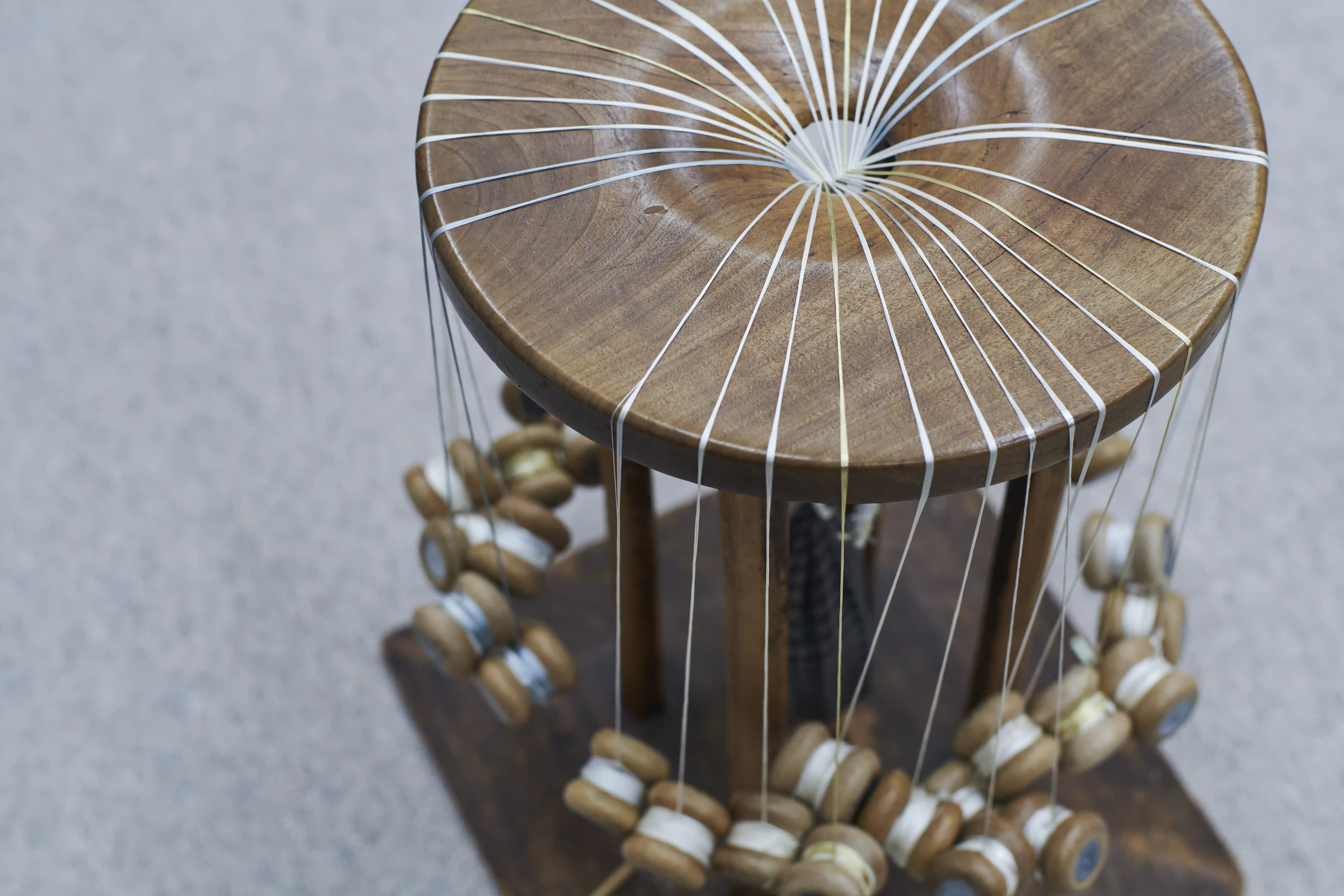
Domyo Co., Ltd. has been making Kumihimo in Ueno, Tokyo for more than three hundred years, and calls its work Yusoku Kumihimo — a claim to hold the full range of techniques the craft has accumulated in Japan, and to keep them in present-day use. When the industry mechanized after the Meiji era, the house chose handwork alone, and has since built an archive of historical cords it has surveyed and reproduced, one at a time.
The film embedded at the foot of this page is the more relaxed of our recordings with Kiichiro Domyo — less an explanation than an hour spent in his company. It reads best after the main series on our YouTube channel, which covers the craft's history, the artisans and Kiichiro Domyo himself, and the experience. If you haven't seen those yet, we'd suggest starting there and returning here afterward.


Interested in a Deeper Encounter?
How it works
We begin with a conversation rather than a menu. You tell us what drew you here, how much time you have, and what you would like to understand; we propose a shape for the visit; we adjust it against what the house can accommodate on the day; and we confirm the details with you before anything is fixed. Nothing here is an off-the-shelf product, and the proposal is expected to change once we know who is coming.
What you’ll get
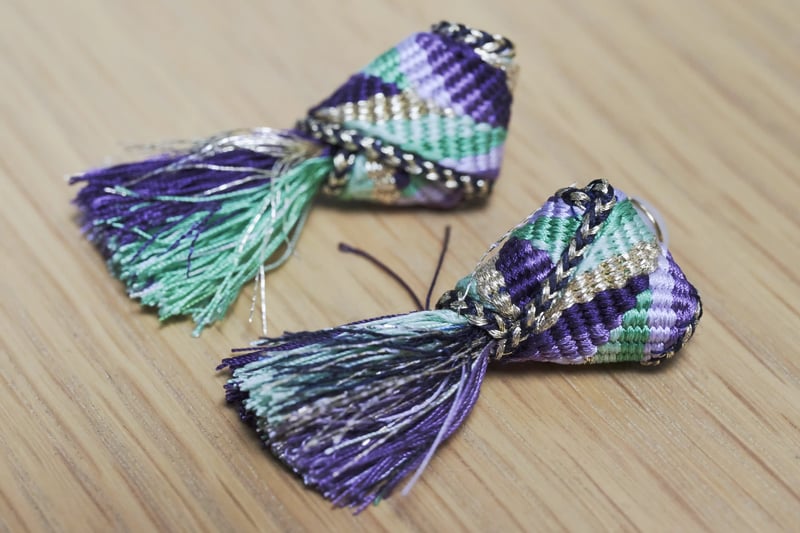
Time at a Marudai, the round stand, braiding with the same tools and the same silk thread the artisans use, in one of the older methods the house teaches to first-time visitors: Nara-gumi, or Yatsu-gumi. The cord you braid is finished by the house afterward and worked into a small piece, a bracelet or a strap, to take home. Around that, as far as the day allows, the context: how a thread becomes a cord, why this house declined machinery, what the tools are to the people who use them. Less a demonstration than a few hours inside a way of working.
Good fit / Not a fit
A good fit if
- You have read the interview and want the room, the tools, and the tempo rather than more information
- You are content to be a beginner for the first fifteen minutes, and curious about what lies past them
- Colour and material hold your attention — silk, dye, the weight of a small object
- You would rather understand one craft slowly than see several quickly
- You are comfortable letting the shape of the visit be settled in conversation with us
Probably not a fit if
- You are looking for a short, photogenic stop between other appointments
- A fixed itinerary, published in advance and unchanged, is what you need
- Sitting with a repetitive task until it stops feeling repetitive sounds like a poor use of a morning
- You are hoping principally to shop, or to meet a named person on a guaranteed basis
- Price is the first question rather than one of the later ones
Practical
- Duration: Half-day — experiences are often combined into a full day
- Group: Private — no other guests are hosted during your visit
- Language: English-speaking guide throughout
- Area: Tokyo
- Lead time: Advance coordination recommended; exact dates are confirmed after the initial conversation
What’s decided later
The sequence of the day, the depth of conversation, and anything arranged around the visit are shaped after the initial conversation. The core is already set — a private visit and an English-speaking guide throughout — and what varies is how the rest of the day is built around it.
House rules
- The workshop is a place of work first, and a place to visit second. Its rhythm takes precedence over ours.
- Fees reflect the time of the people who make things here. We don't arrange visits on the expectation of a discount, and we'd rather say so early than late.
- Some processes and some rooms may not be open on a given day. We won't press the house to open them.
- Photography and filming follow the house's guidance, which we'll confirm before you arrive.
- Tools and thread are in daily use. We ask that they be handled as the artisans handle them, and that instructions be followed closely at the stand.
- Please keep to the agreed time. A late arrival shortens the visit rather than extending it.
- If plans change, tell us as soon as you can; materials for the experience are prepared in advance.
Conversation and cultural engagement remain central to the experience. Please note that the shape of the day may be adjusted at short notice — the host's own condition and the circumstances of the working space on the day come first. We will tell you as soon as anything changes.