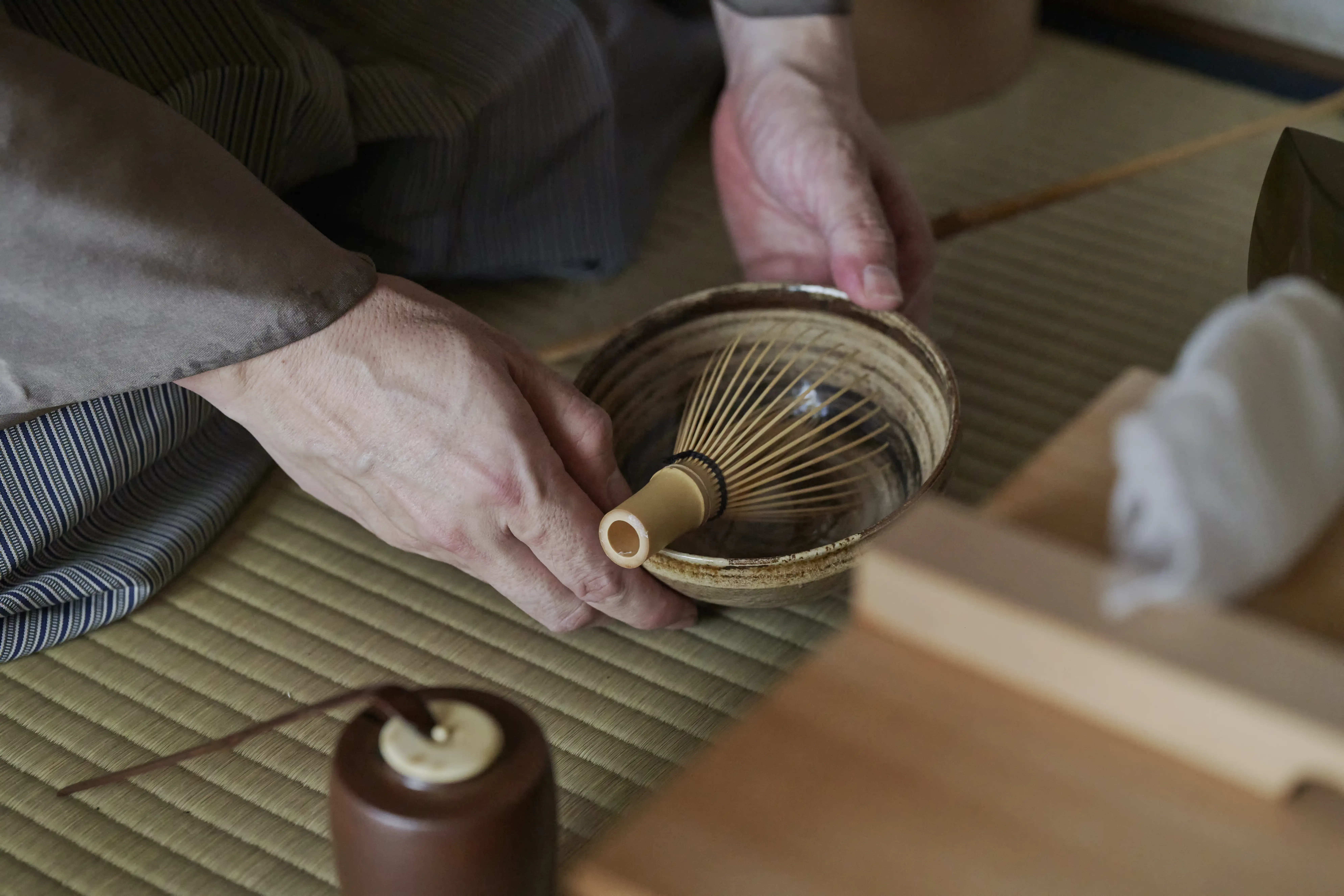
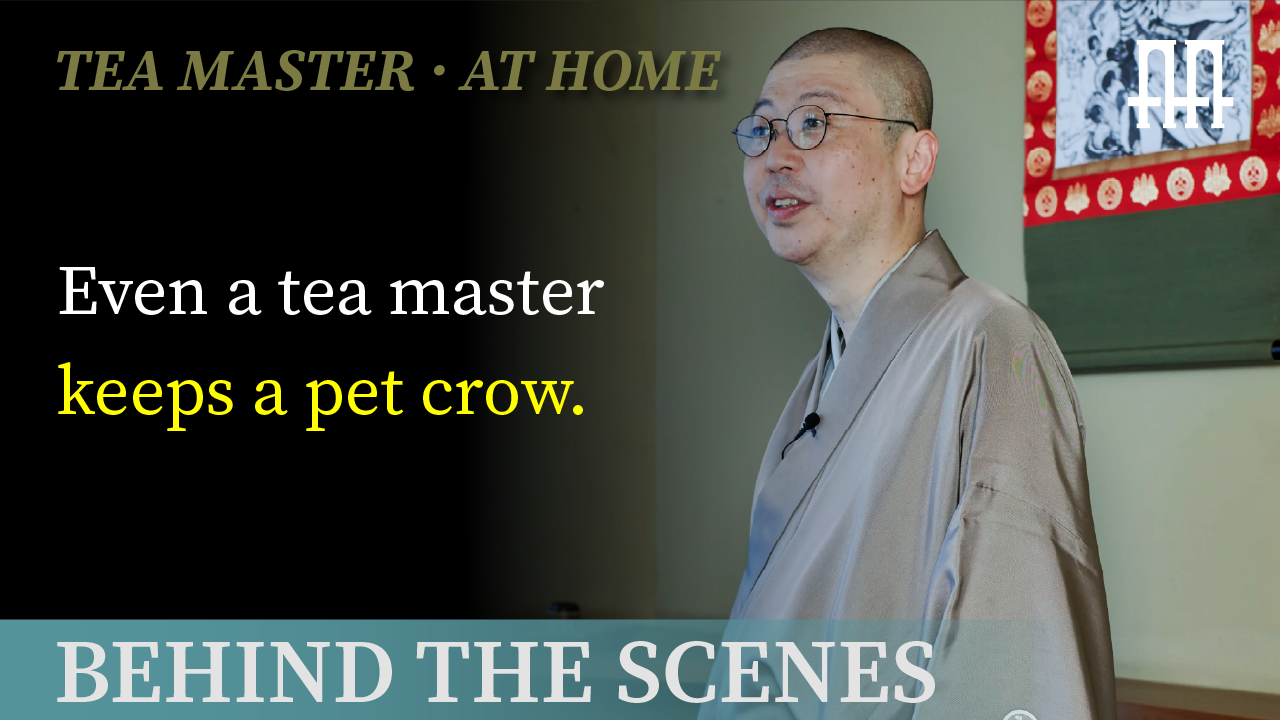
Sokou Udagawa is the 18th head of the Sowa school of tea, an advisor to the Nezu Museum, and the host of chaji gatherings built around a single shared bowl of koicha. His practice moves between centuries-old form and small, personal touches — a glass tenmoku bowl, a crow he keeps at home, an inscription added to a Studio Ghibli producer's brushwork.
The video embedded lower on this page offers a quieter, behind-the-scenes continuation of that world. If you have not yet watched the main YouTube series — covering the history of chaji, Udagawa himself, and the experience — it may help to begin there first, and then return to this page for a closer sense of the atmosphere around his practice.
Interested in a Deeper Encounter?
How it works
This experience begins with a conversation about your interests, the number of guests, and what you'd like to take away from a chaji. Based on that, we propose an appropriate format, make any necessary adjustments, and confirm the final plan together.
Rather than a fixed, off-the-shelf program, it is better understood as an evening arranged through hearing, proposal, adjustment, and confirmation.
What you’ll get
Good fit / Not a fit
- Travelers who want to experience tea as a full evening of hospitality, not just a single demonstration
- Those comfortable with quiet, unhurried pacing and long-form conversation
- Visitors interested in the history of Japanese tea culture, hospitality, or the way of tea as a designed experience
- People who value depth and atmosphere over checklist-style sightseeing
Not a fit
- Those looking for a quick, simplified tea ceremony demonstration
- Visitors expecting a fully standardized experience with the same fixed structure every time
- People mainly seeking a photo opportunity without interest in the cultural context
- Travelers who prefer everything explained immediately and completely, without ambiguity or quietness
Practical
- Duration: Half-day — experiences are often combined into a full day
- Group: Private — no other guests are hosted during your visit
- Language: English-speaking guide throughout
- Area: Tokyo
- Lead time: Advance coordination recommended; exact dates are confirmed after the initial conversation
What’s decided later
The sequence of the day, the depth of conversation, and anything arranged around the visit are shaped after the initial conversation. The core is already set — a private visit and an English-speaking guide throughout — and what varies is how the rest of the day is built around it.
House rules
- Please approach the experience with respect for the host, the space, and the cultural setting.
- We ask guests to remain open to forms of learning that may be quieter, slower, or less immediately explanatory than standard tourism formats.
- Requests based primarily on price reduction are generally not a good match for the way these experiences are arranged.
- Photo, video, and recording expectations should be confirmed in advance rather than assumed.
- Final details are coordinated carefully, so we appreciate thoughtful communication and timely confirmation once a proposal has been shared.
Conversation and cultural engagement remain central to the experience. Please note that the shape of the day may be adjusted at short notice — the host's own condition and the circumstances of the working space on the day come first. We will tell you as soon as anything changes.