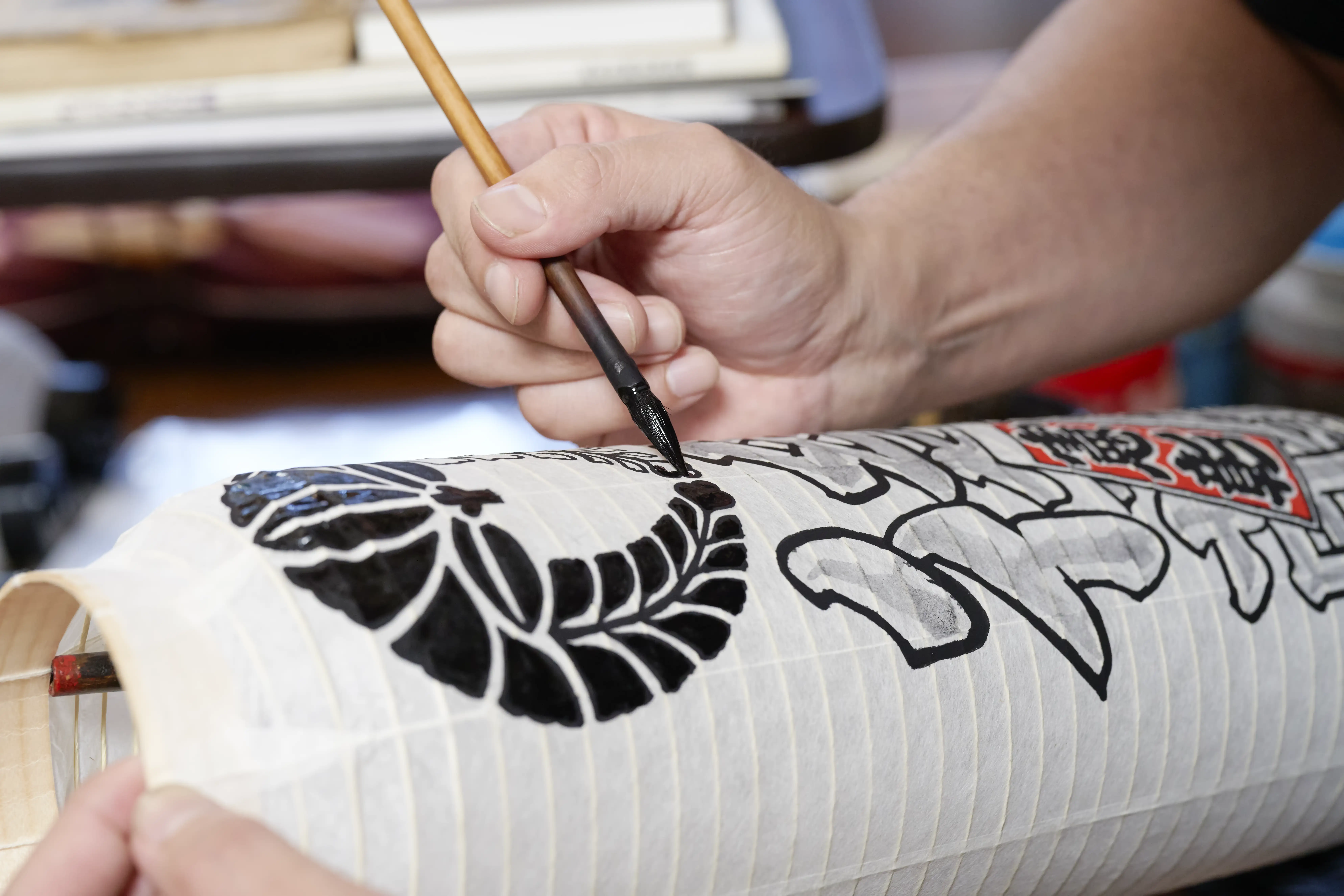
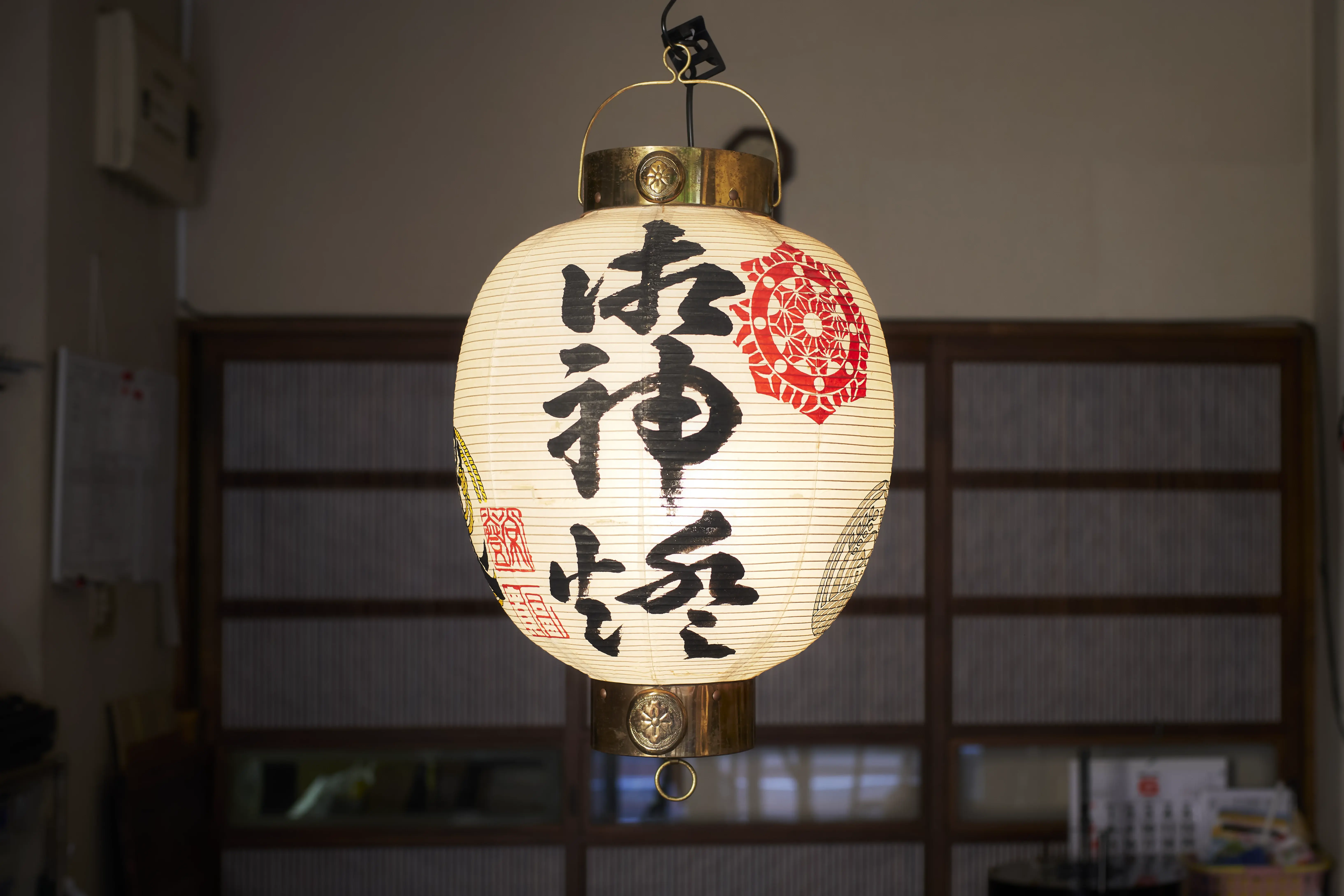
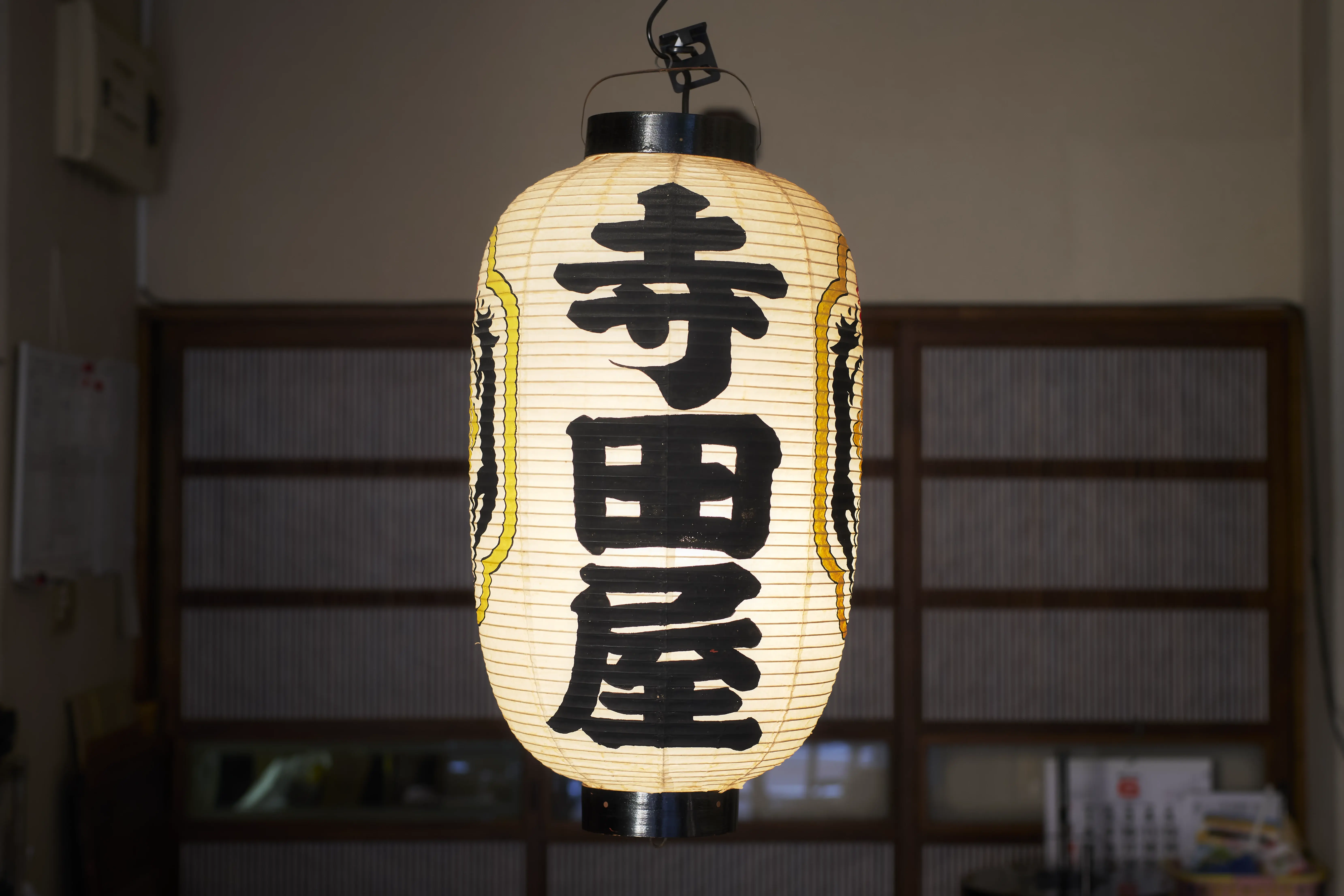
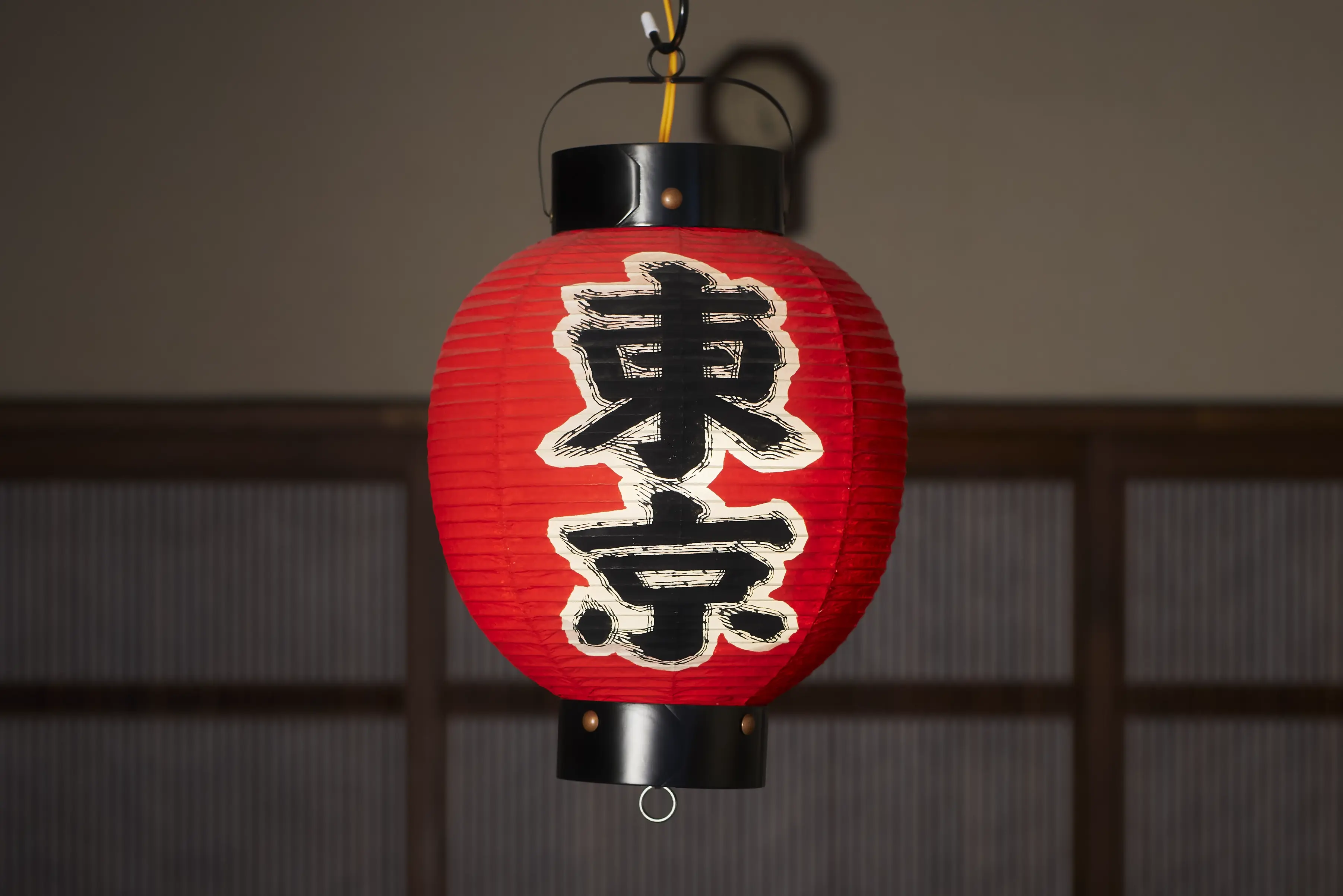
Kenichiro Murata is the fourth generation of Namidabashi Ōshimaya, a hand-painted chōchin workshop founded in 1913. His work moves between an outline-first lettering technique called kago-moji and the practical, everyday world of festival lanterns, shop signs, and family crests.
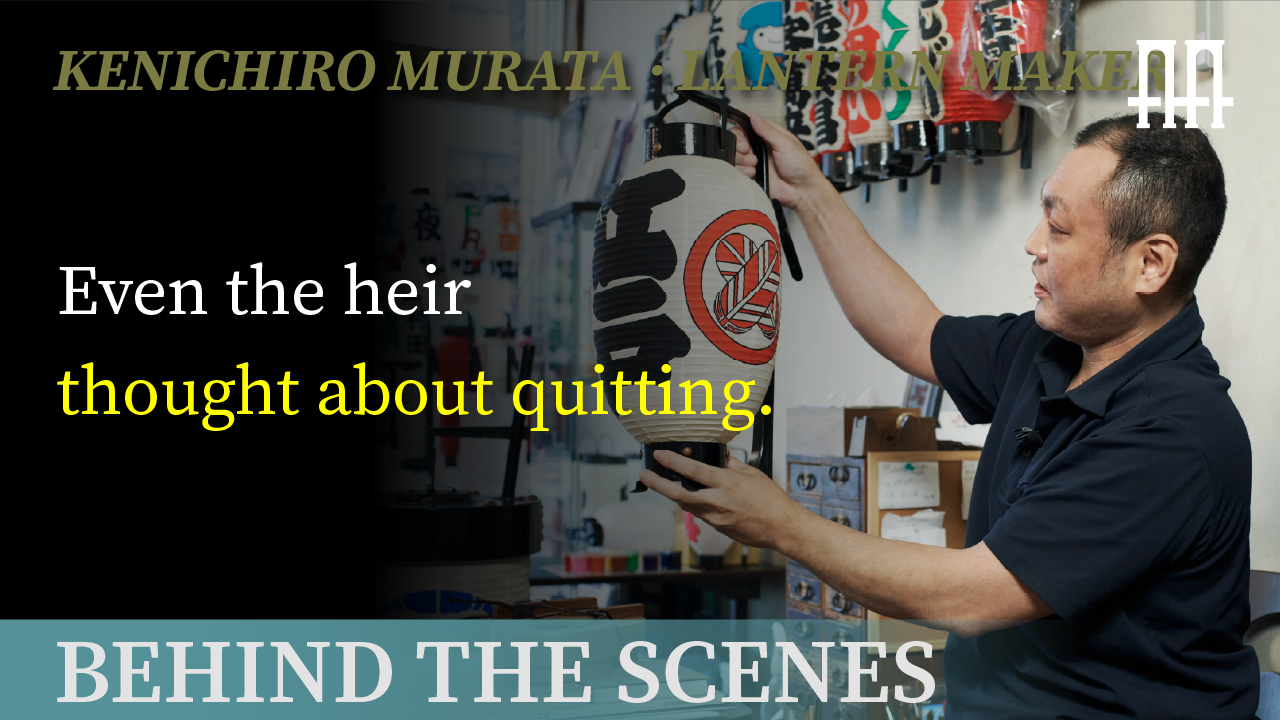
The video embedded lower on this page offers a quieter, behind-the-scenes continuation of that world. If you have not yet watched the main YouTube series — covering the history of chōchin, Murata himself, and the experience — it may help to begin there first, and then return to this page for a closer sense of the workshop itself.
Interested in a Deeper Encounter?
How it works
This experience begins with a conversation about what you'd like to write — a name, a word, or a logo. Based on that, Murata prepares a pencil outline sized to your lantern in advance, so that on the day you can trace and fill it in yourself, with him working alongside you.
Rather than a fixed, off-the-shelf program, it is better understood as a hands-on session shaped through preparation, guidance, and your own hand on the brush.
What you’ll get
Good fit / Not a fit
- Travelers who want to try hand-lettering themselves, not just watch a demonstration
- Families and groups, since the experience allows conversation and is manageable for children
- Those interested in the history of Edo-period crafts, festival culture, or hand lettering
- People who value a tangible, take-home result over a purely observational visit
Not a fit
- Those looking for a purely passive viewing experience with no hands-on component
- Visitors expecting a perfectly even, professional-quality result on their first attempt
- People mainly seeking a photo opportunity without interest in the craft itself
- Travelers who prefer everything explained immediately and completely, without a bit of trial and error
Practical
- Timing: To be confirmed based on availability and proposal
- Group size: Families and small groups are welcome; exact size to be confirmed
- Language: English or Japanese
- Area: Arakawa, Tokyo
- Lead time: Advance coordination recommended; exact lead time to be confirmed
-
Format: Final format is adjusted after hearing and proposal. Experience contents are not treated as fully fixed at this stage
What’s decided later
The final structure is arranged after hearing your interests, group size, and what you'd like to write. Elements such as the exact wording or logo, the balance between demonstration and hands-on time, and what can realistically be included on the day are confirmed later rather than assumed in advance.
Where relevant, the encounter may include time watching the third generation at work or conversation about the tools and materials, but the exact configuration should be treated as case-specific.
House rules
- Please approach the experience with respect for the workshop, the tools, and the craft itself.
- We ask guests to remain patient with the hands-on portion — results take practice, and unevenness is part of learning by hand.
- Requests based primarily on price reduction are generally not a good match for the way these experiences are arranged.
- Photo, video, and recording expectations should be confirmed in advance rather than assumed.
- Final details are coordinated carefully, so we appreciate thoughtful communication and timely confirmation once a proposal has been shared.
Conversation and cultural engagement remain central to the experience. However, depending on the guest’s interests and desired depth of engagement, the artisan featured on this page is not necessarily guaranteed to be the central focus of the tour in every case.