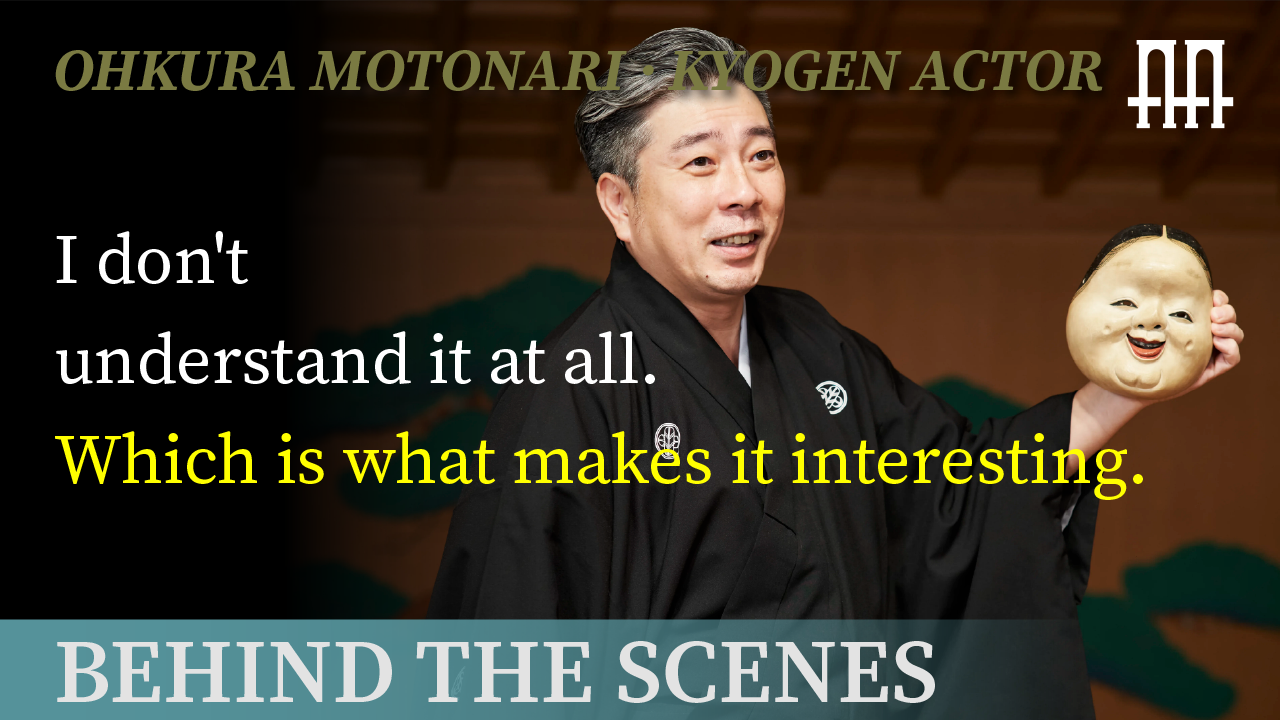
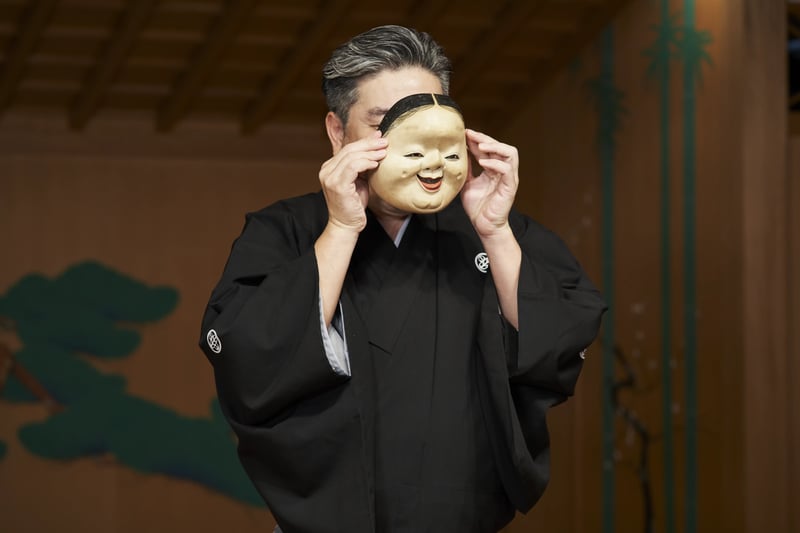
Ohkura Motonari is a nōgaku performer of the kyōgen role in the Ohkura-ryū, one of two lineages carrying kyōgen forward after seven hundred years, and the founder of Seisho-kai, his own practice group in Nara. His interview traces how a fixed form — the kata — is kept intact across generations, and what it costs and gives to keep it that way.
The video embedded lower on this page offers a closer, more immediate look at that world. If you haven't yet seen the main YouTube series — covering the history of kyōgen, Ohkura Motonari himself, and the experience — it may be worth beginning there first, and then returning to this page.
Interested in a Deeper Encounter?
How it works
This experience begins with a conversation about your interest in kyōgen, your schedule, and your level of familiarity with the practice. Based on that, Seisho-kai proposes an appropriate format, makes any necessary adjustments, and then confirms the final plan together.
Rather than a fixed off-the-shelf program, it is better understood as a carefully arranged encounter shaped through hearing, proposal, adjustment, and confirmation.
What you’ll get
Good fit / Not a fit
- Travelers curious about kyōgen as a discipline of restraint, not simply a comic performance
- Those interested in a form passed down largely unchanged for seven hundred years
- Visitors comfortable trying something physical and unfamiliar — kneeling in seiza, chanting, bowing — in front of others
- People drawn to the relationship between a fixed form and the person who keeps it
Not a fit
- Those expecting a staged performance built for an audience rather than a hands-on practice session
- Visitors unable to kneel or sit on the floor for extended periods
- People mainly seeking a photo opportunity without interest in the thinking behind the form
- Travelers with very limited time, as the practice rewards a slower pace
Practical
- Duration: Half-day — experiences are often combined into a full day
- Group: Private — no other guests are hosted during your visit
- Language: English-speaking guide throughout
- Area: Tokyo
- Lead time: Advance coordination recommended; exact dates are confirmed after the initial conversation
What’s decided later
The sequence of the day, the depth of conversation, and anything arranged around the visit are shaped after the initial conversation. The core is already set — a private visit and an English-speaking guide throughout — and what varies is how the rest of the day is built around it.
House rules
- This is a hands-on practice, not a performance to watch from a distance.
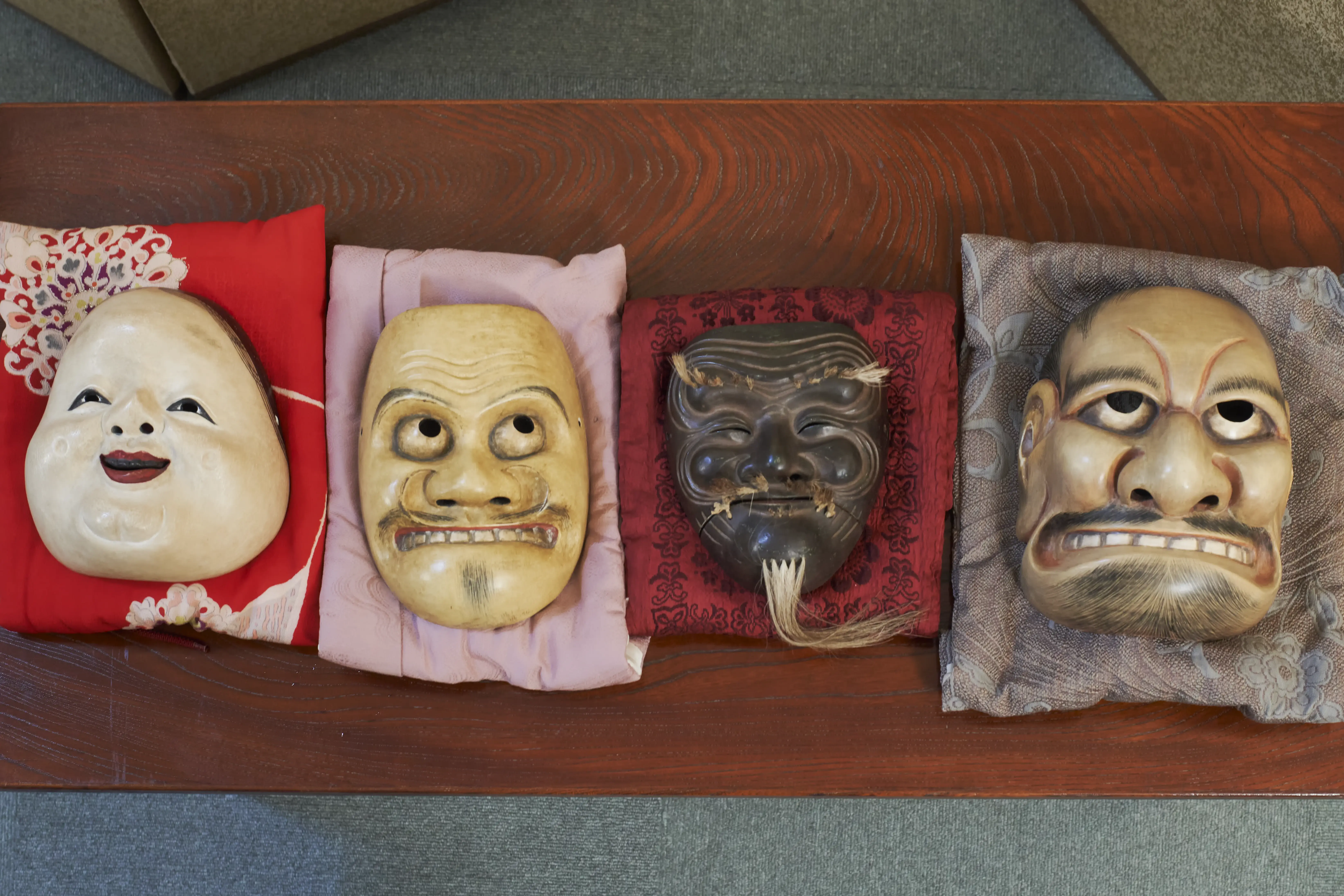
- Masks and costumes are handled only by Seisho-kai members; guests are asked not to touch them directly.
- Footwear is removed on the stage; requests based primarily on price reduction are generally not a good match for the way this experience is arranged.
- Photo, video, and recording expectations should be confirmed in advance rather than assumed.
- Final details are coordinated carefully, so we appreciate thoughtful communication and timely confirmation once a proposal has been shared.
Conversation and cultural engagement remain central to the experience. Please note that the shape of the day may be adjusted at short notice — the host's own condition and the circumstances of the working space on the day come first. We will tell you as soon as anything changes.