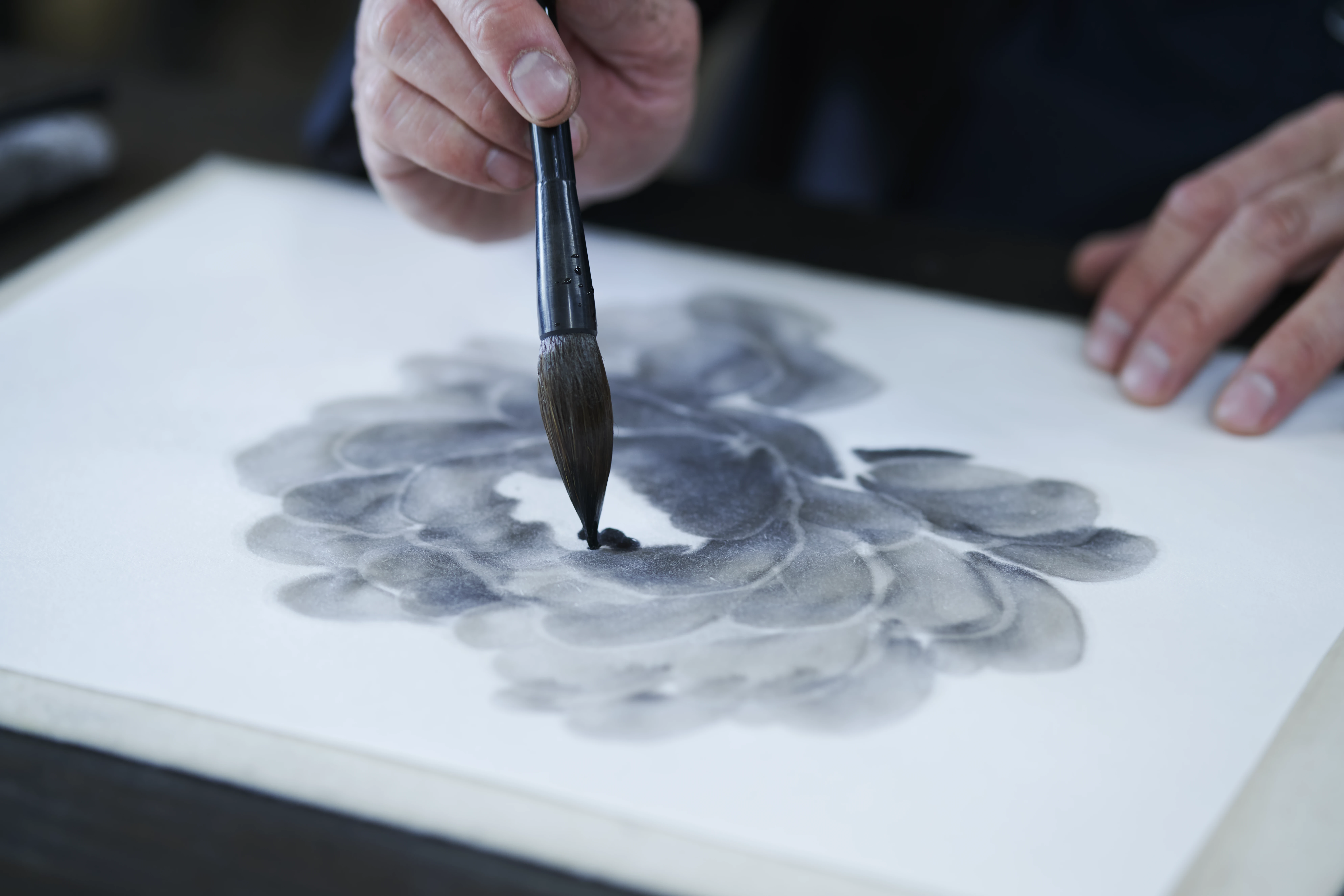
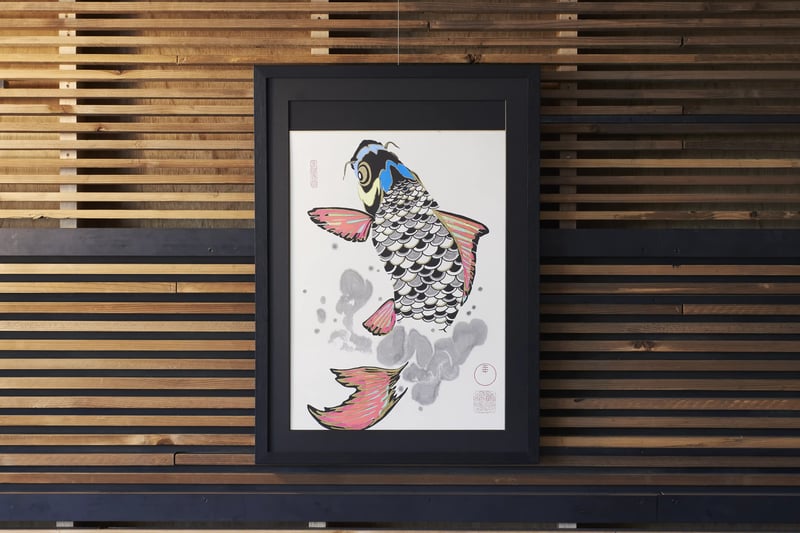
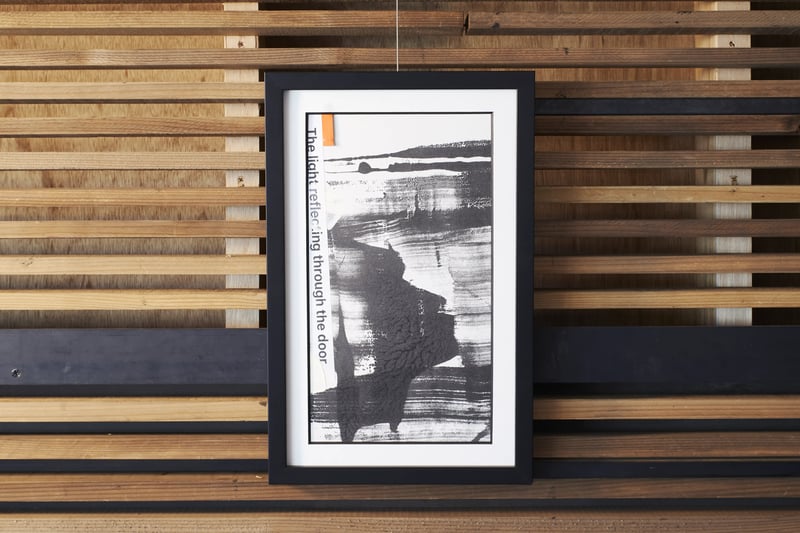
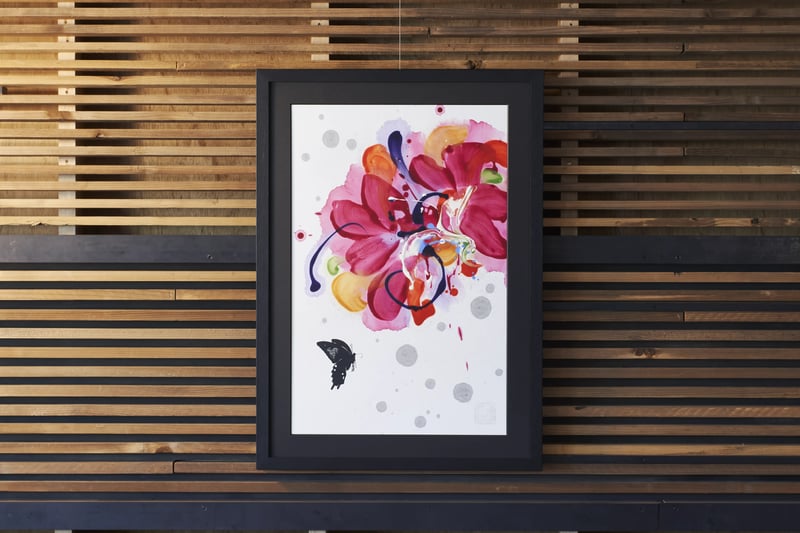
Shukou Tsuchiya is a contemporary sumi-e painter working in Higashi-Kitazawa, Tokyo, in a teaching lineage that reaches back through Saitō Nanboku and Terayama Nanyō to Maruyama Ōkyo. He inherits the classical technique with rigor while holding the view that tradition lives by being renewed rather than preserved unchanged — a position that has shaped both his work and the atelier itself.
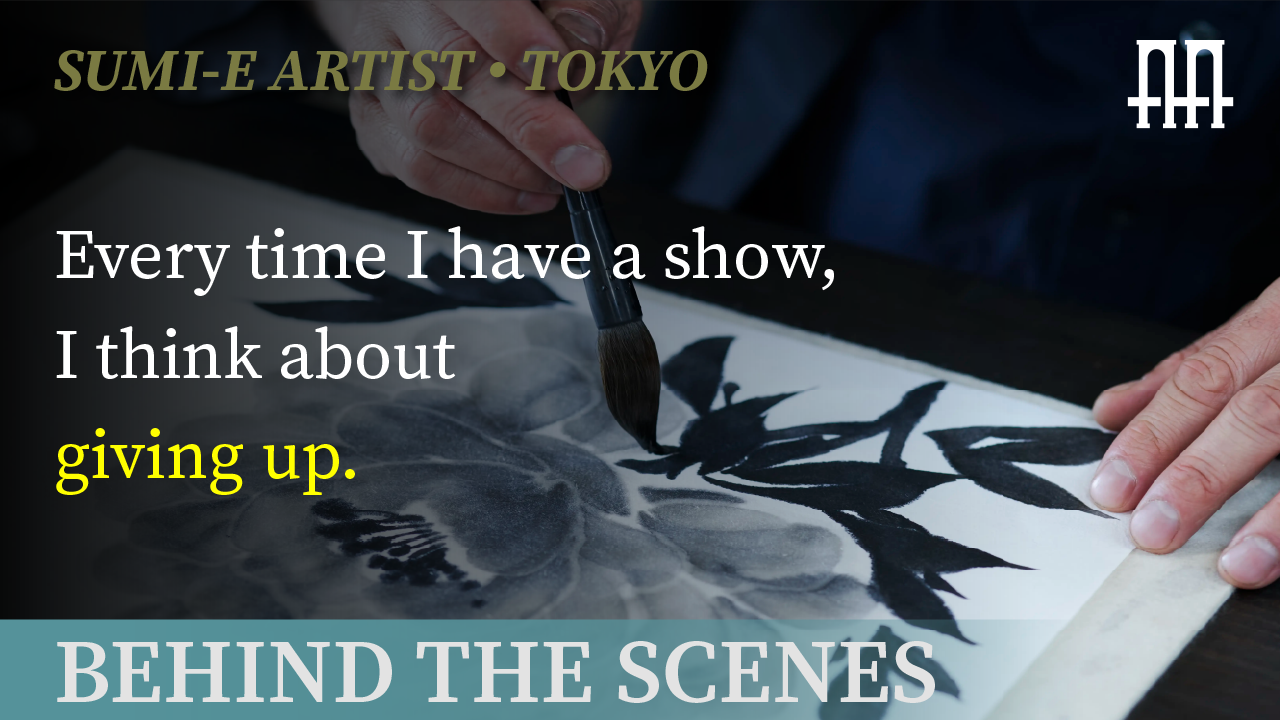
The short video at the bottom of this page is a more informal Behind the Scenes glimpse of that room. A separate three-part series on YouTube — one on the cultural history of sumi-e, one on Shukou Tsuchiya himself, and one on the experience at the atelier — sits alongside it; for readers new to his work, that series is the natural place to begin.
Interested in a Deeper Encounter?
How it works
Each visit begins with a hearing — a brief conversation about what draws you to sumi-e and the kind of time you'd like to spend in the room. From there, a proposal is shaped, adjusted in light of your response, and confirmed before the day. The experience is not a fixed product. It is a structure built around the visitor.
What you’ll get
Time in the room itself — the keikoba in Higashi-Kitazawa where Shukou Tsuchiya works and teaches. The visit is layered: conversation with the artist about a thousand-year lineage and his own position within it; an introduction to the minimal tools the tradition rests on; and time with the shosa that precedes the first stroke. The aim is not a finished piece but a slower, more attentive way of approaching the page.
Good fit / Not a fit
A good fit for:
- People curious about the thinking behind ink painting, not only the finished result.
- Those who enjoy slowing down and giving close attention to a single act.
- Visitors who want to meet the person and the ideas as much as learn a skill.
- Anyone open to an experience shaped through conversation rather than a fixed program.
Perhaps less suited to:
- Those looking mainly for a quick, photo-ready activity.
- Anyone who would prefer a standardized class with a set, guaranteed outcome.
- Visitors hoping to leave with a polished, gallery-ready work from a single short session.
Practical
- Duration: Half-day — experiences are often combined into a full day
- Group: Private — no other guests are hosted during your visit
- Language: English-speaking guide throughout
- Area: Tokyo
- Lead time: Advance coordination recommended; exact dates are confirmed after the initial conversation
What’s decided later
The sequence of the day, the depth of conversation, and anything arranged around the visit are shaped after the initial conversation. The core is already set — a private visit and an English-speaking guide throughout — and what varies is how the rest of the day is built around it.
House rules
- These visits are offered in a spirit of exchange — please come with curiosity and respect for the practice and the space.
- The fee reflects the artist's time and craft; negotiating the price down isn't part of how we work.
- The studio is a working space; we ask that you treat it, the tools, and the materials with care.
- Anything you'd like to film or share is best agreed in advance, out of respect for the work and the place.
Conversation and cultural engagement remain central to the experience. Please note that the shape of the day may be adjusted at short notice — the host's own condition and the circumstances of the working space on the day come first. We will tell you as soon as anything changes.