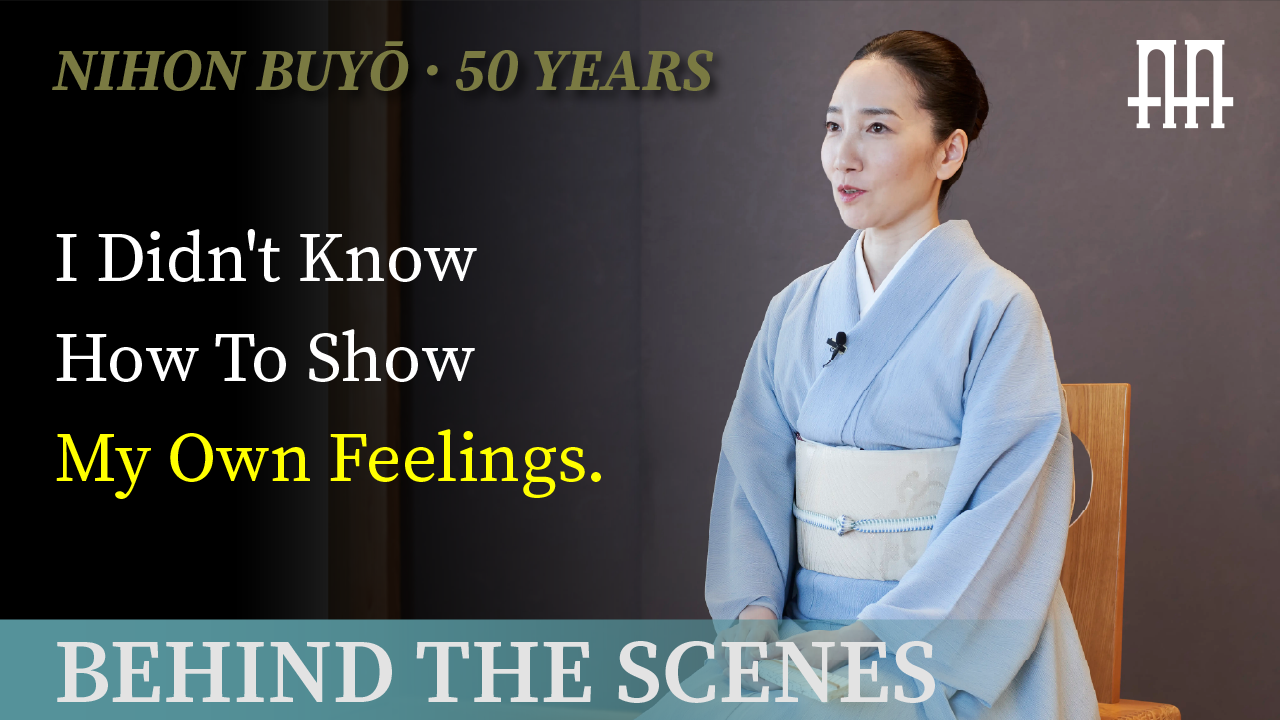
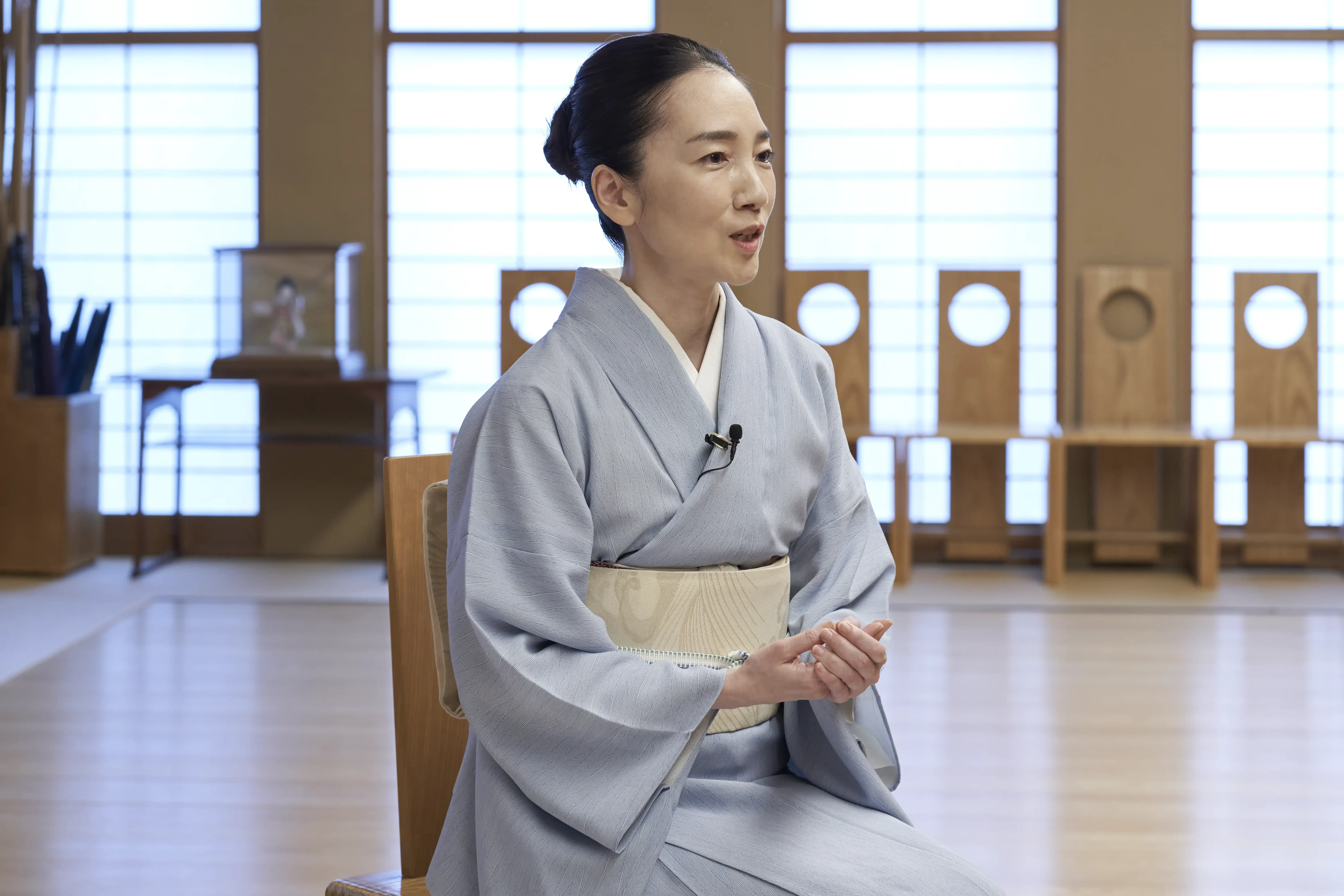
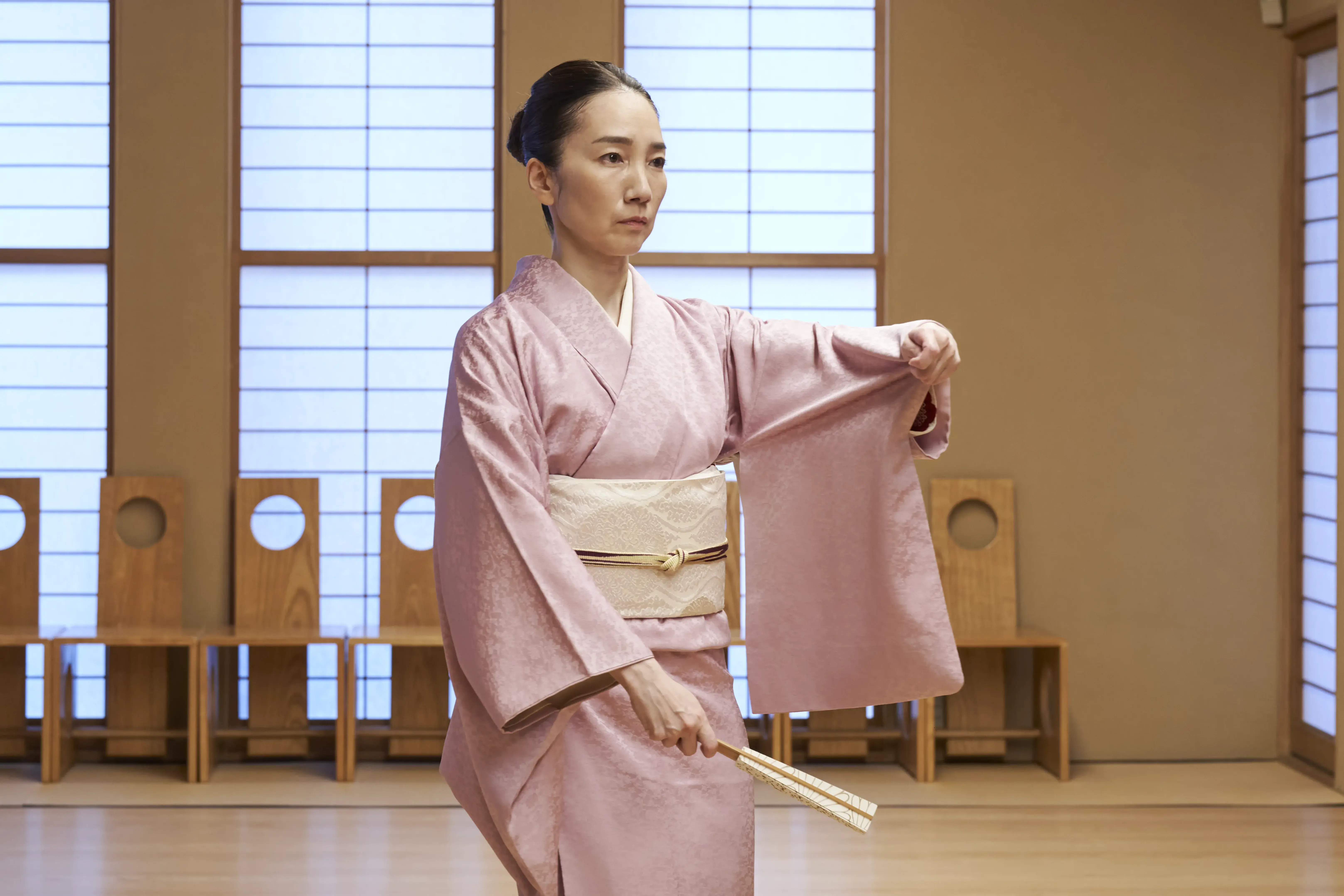
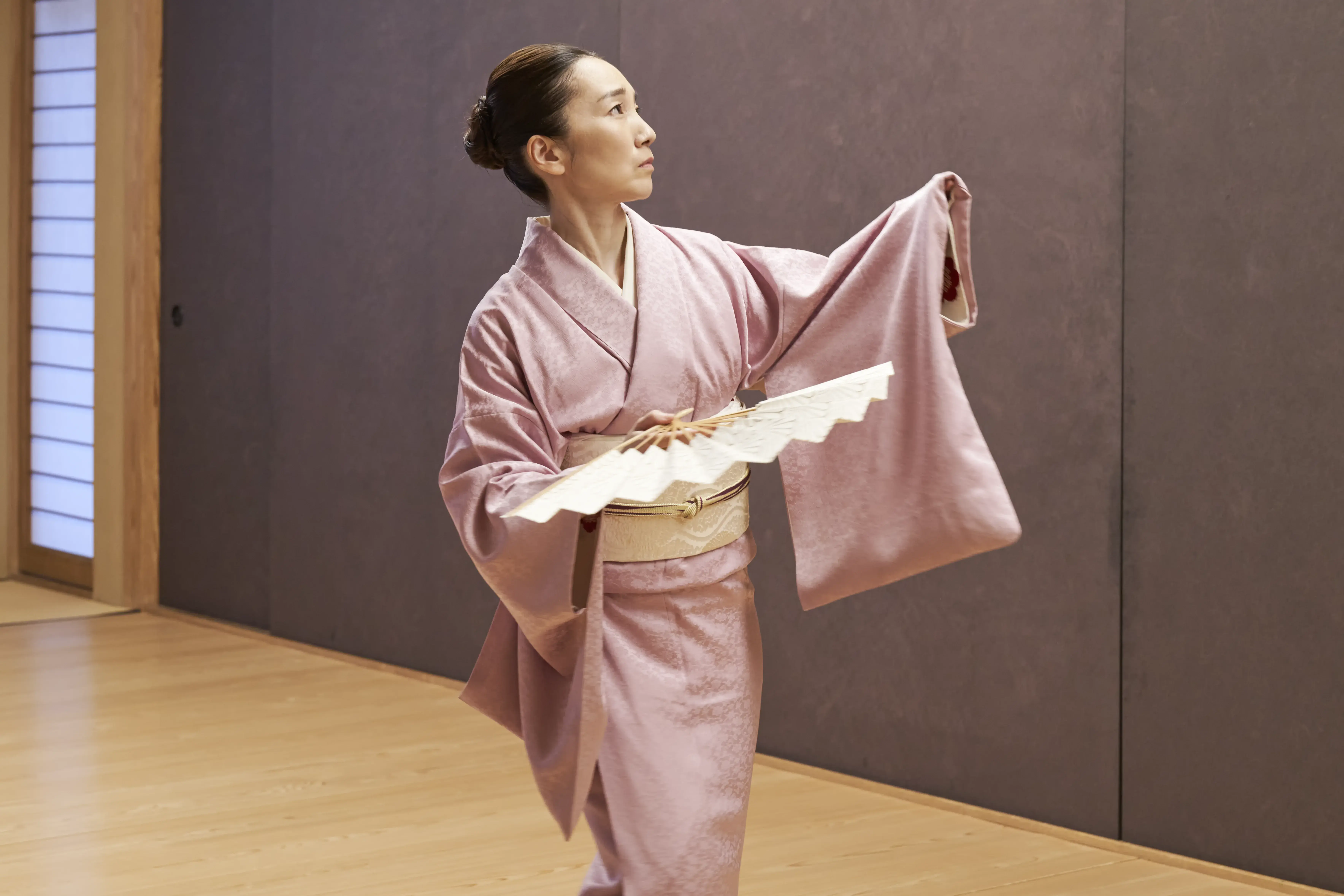
In a practice studio in Ginza, the sound of a fan opening rings out once. Cherry blossoms scatter, snow falls, the cry of an insect draws near and then slips quietly away — a single fan traces the seasons onto the air before her. Yukari Onoe, a dancer of Nihon Buyō — classical Japanese dance that grew out of Kabuki — in the Onoe school, stood on stage for the first time at three and has walked this path ever since she first performed Kabuki at eight. The name of the iemoto — the head who leads a school and carries on its hereditary name — passed to her younger brother; she, following her father's words, inherited the dance itself. She is a Nihon Buyō artist and, at the same time, a woman who has widened her stage as an actor.
This article follows, in her own words, the origins of Nihon Buyō — a history reaching back to myth — the fan, which for a dancer is almost part of her own body, a keiko-ba where a grandfather's photograph and old cassette tapes remain, and the core of the Onoe school's art: dignity, freshness, and the unexpected.
Two Inheritances, One Stage
For Yukari Onoe, Nihon Buyō was never something she chose; it was the very place she was born into. Begin, then, at the beginning.
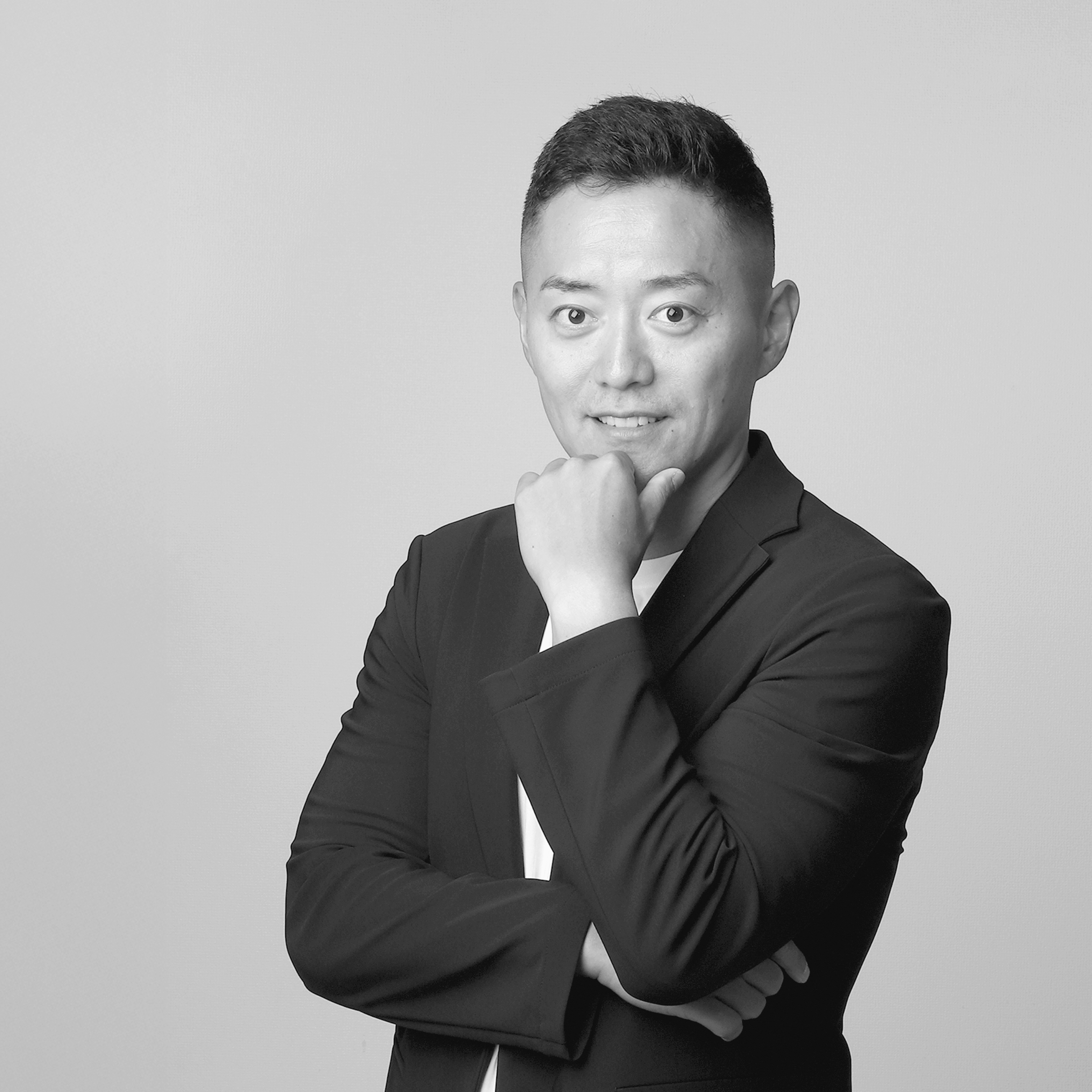
Toguri: I understand your first performance was at the age of three. Is there anything you remember from it?
Yukari: It was a recital of the Onoe school, at Shinbashi Enbujō, a Tokyo theater for Kabuki and traditional dance. I danced the child's role in a piece called "Harusame" (Spring Rain). I remember clearly how happy I was to be dressed in beautiful makeup and to dance. I was born into a house of Nihon Buyō, so dance was my play, and I was taken to Kabuki before I even understood what it was. Imitating a princess's dress was, for me, a kind of make-believe. I couldn't draw a flower, but I could remember the names of the actors — that was the kind of child I was. Having Nihon Buyō in my life felt entirely natural to me.
Toguri: What was the moment that made you resolve to live as a dancer?
Yukari: When I was eight, in the second year of elementary school, I was given the role of the butterfly spirit in Nakamura Kanzaburō XVIII's — then Nakamura Kankurō — "Shunkyō Kagamijishi." In Kabuki you can stand on stage every day for twenty-five days. Nihon Buyō performances are usually a single day, so being able to dance every day was genuinely joyful to me. I danced that same butterfly role again at Kabukiza in fifth and sixth grade. That experience was enormous for me — I knew I would keep doing this, or rather, I couldn't imagine doing anything else. My father's training was strict, and he rarely praised me, but there was a kind of satisfaction in answering what was asked of me. That experience settled my resolve.
The name of the iemoto of the Onoe school has, for generations, passed to a son. Yukari has a younger brother.
Toguri: You were born into the family of the iemoto, and you have a younger brother. How did you understand your own position as a child?
Yukari: As a child, I simply assumed the iemoto would naturally be a man. Since I had a brother, I assumed he would carry both my father's name and the position of iemoto. But then, I wondered what would become of me — I did feel some unease. It was around the time I was dancing the butterfly role that I asked my father about it. He told me that although my brother would carry the name of iemoto, he wanted me to keep dancing, to build a career as a female dancer. I had never once hated dancing, so I simply thought, "I see."
Toguri: Did you ever waver over your path?
Yukari: In the essay we wrote in elementary school about what we wanted to become, I remember looking around and seeing everyone writing all sorts of things. I thought seriously, even as a child, that writing it down would bring a kind of responsibility. I considered writing something else, but in the end I wrote "Nihon Buyō dancer" and turned it in. In the end, I couldn't imagine anything else. My father always told me to have all kinds of experiences — he let me go out with friends, join school clubs, with no curfew, very generously. I'm also not one to lose, so I wanted to know and try everything everyone else was doing. That's how I spent my teenage years.
Toguri: In 1990 you were granted the name Yukari Onoe. What did it feel like to receive a name?
Yukari: My father, too, had a name apart from his given name — Onoe Kikunojō — so I understood it as simply how things were. When I reached the age to be granted a name, my parents and I thought for a long time about what it should be, the way you might think about naming a child. My given name is Yukari — written differently — and I didn't want to lose that sound. I also liked the character for "purple," and for a number of reasons, we settled on this name. At the natori ceremony — the milestone at which a teacher grants a professional stage name — we exchanged cups of sake, and when I received the certificate, I felt a real tension. Even as a child, I sensed the weight of receiving a name to carry into new work, and it felt very fresh to me. After taking the name, the stage that had simply been enjoyable until then began to be watched with different eyes, I think, and I became far more nervous.

Having earned a name as a Nihon Buyō dancer, she would soon step into another stage of expression.
Toguri: Even as you were building a name as a dancer, you also moved into acting. What led to that?
Yukari: Asakura Setsu, a leading figure in Japanese stage design who, though a Nihon painter herself, worked on more than 1,200 stage productions, had a connection with my father, and when I was eighteen, in my third year of high school, she suddenly asked whether I'd like to appear in a play she was directing. It wasn't kimono but Western dress, and my debut was in a small theatre inside PARCO Theater, a contemporary theater in Shibuya, Tokyo. What was different from Nihon Buyō was speaking lines in modern language, and laughing with my teeth showing. That was a first for me, and it didn't go well at all — I have only frustrating memories of it. But that lit a fire under my refusal to lose, and I thought, I can't end things here. It never felt like something entirely separate; I felt strongly that it shared the same ground as Nihon Buyō in the sense of "expression," so I began studying acting as well. That has carried through to what I do now.
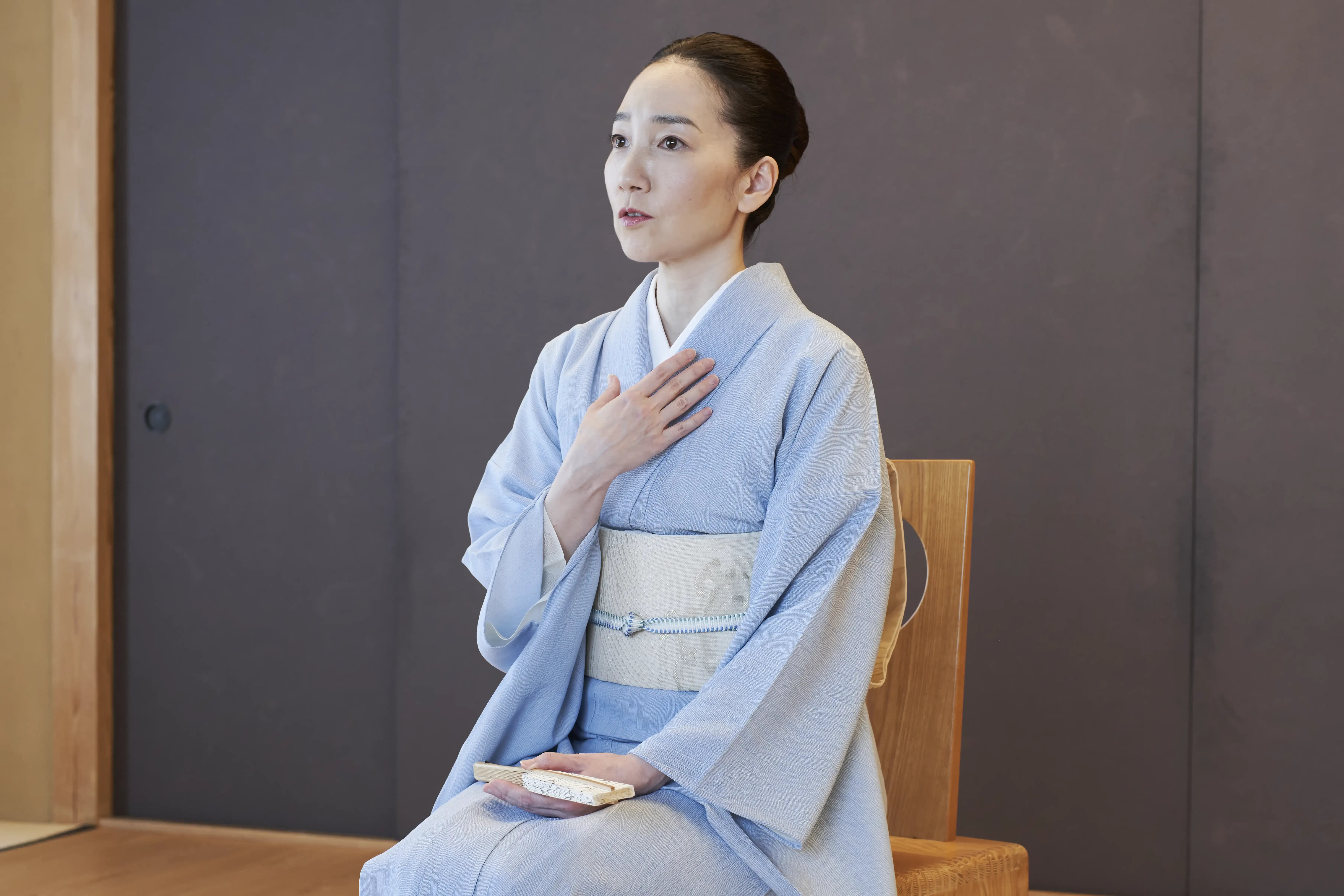
Her father's single sentence shaped the outline of Yukari's whole life. A name is singular, and cannot be divided. But a dance can be carried on by more than one person. Her brother, who inherited the name of iemoto, and Yukari, who did not, both carry on the same dance, each giving it life on their own stage.
From Myth to the Kabuki Stage
Where did the dance Onoe inherited come from? Her account reaches back further than one might expect.
Toguri: For someone encountering Nihon Buyō for the first time, could you tell us how it came to be? I understand the origin of dance itself is said to be very old.
Yukari: The beginning of dance is said to trace back to when Amaterasu Ōmikami hid herself in the Ama-no-Iwato, the heavenly rock cave, and Ame-no-Uzume-no-Mikoto danced a trance-like dance to lure her out — that is said to be the origin. Our Nihon Buyō has its roots in Kabuki, and Kabuki itself began when a woman named Izumo no Okuni danced in the flamboyant dress of a kabukimono — flamboyant, unconventional figures, the root of the word "Kabuki" — in what is now Kyoto. It began as popular entertainment, beloved by ordinary people. Then, entering the Meiji era, it was influenced by Western dance and other forms, and a movement arose to make it into a somewhat more refined art. By the Taishō era, dancers independent of Kabuki appeared, and various schools formed — that is Nihon Buyō. Where Kabuki is centred on men, the fact that women entered this world is, I think, one of its major distinguishing features.
Toguri: What is the relationship with Noh-kyōgen and ningyō jōruri?
Yukari: In the Edo period, Kabuki, Noh-kyōgen, and ningyō jōruri — puppet theatre performed to shamisen narration, later known as Bunraku — stimulated one another, and each continues into the present in its own form. Kabuki is built from drama, dance, and music together, and its dance originally grew out of the dance of the onnagata — a male performer who plays female roles in Kabuki. The onnagata's dance took shape first, and from it shamisen music developed, and dance-dramas emerged. Works with male leads appeared too. Eventually, pieces that had become popular in ningyō jōruri began to be staged in Kabuki as well — "Chūshingura" and "Yoshitsune Senbon Zakura" are examples of this. In "Yoshitsune Senbon Zakura," the scene "Yoshinoyama" — a michiyuki, a travel scene danced as a journey, in which a fox disguised as Satō Tadanobu accompanies Shizuka Gozen — is one such dance that became independent and is still performed today as a piece of Nihon Buyō.
Toguri: Would "Dōjōji" belong to that same lineage?
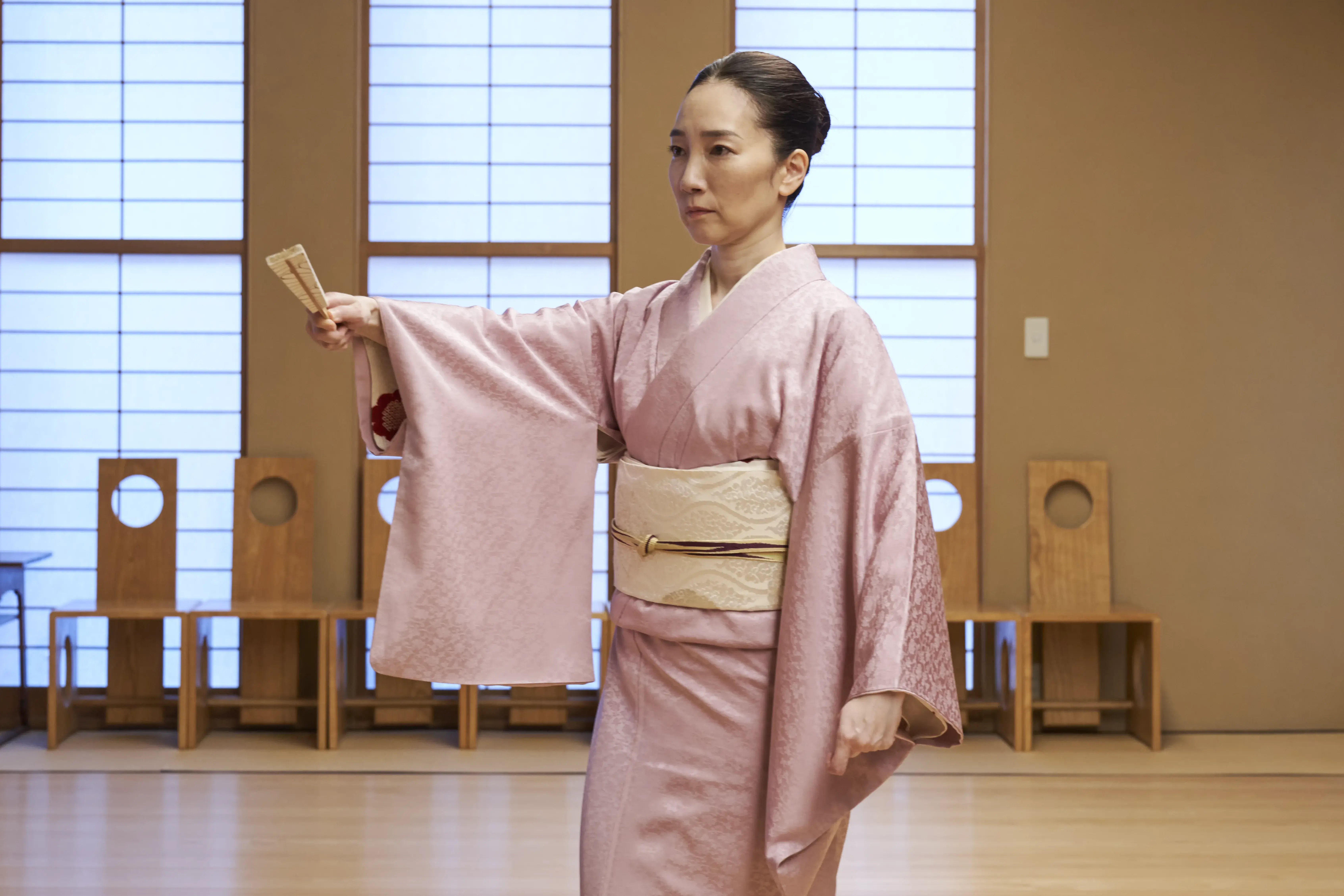
Yukari: The Kabuki dance “Kyōganoko Musume Dōjōji” was inspired by the Noh play “Dōjōji.” Regarded as the pinnacle of the repertoire for onnagata (male performers who play female roles in Kabuki), it is based on the legend of Anchin and Kiyohime, but its true focus lies in portraying, through dance, the full range of emotions of a woman in love: joy, anger, sorrow, and delight. In the Kabuki version, the dancer appears in sumptuous costumes against a lavish stage set painted with cherry trees in full bloom. Scene by scene, the costume changes again and again through hikinuki (an onstage quick-change revealing a new costume in an instant) and hayagawari (rapid transformations), and the piece culminates with the dancer climbing atop the fallen temple bell. This flamboyant staging makes it a dazzling work of entertainment as well. Nihon Buyō, by contrast, went on to establish suodori (dance stripped of wig, makeup and elaborate costume, focused on movement alone), a form both spare and profound: the only set is a folding screen, a single costume is worn throughout, and scenery and inner emotion are conveyed through dance alone, inviting the audience’s imagination to expand all the more.
Toguri: How many schools are there? Where does the Onoe school stand?
Yukari: Just among the schools recorded by the Nihon Buyō Association, there are more than 108. The Onoe school was founded by Onoe Kikugorō VI as its first iemoto; his disciple, my grandfather, succeeded him as the second iemoto under the name Onoe Kikunojō I. My father carried it on after him, and today my younger brother, as the fourth iemoto, holds the name Onoe Kikunojō III.
Even as this mythic lineage is carried on as bodily memory, the places where this art can be shown are, right now, disappearing.
Toguri: Is there a challenge you are currently facing that you could share?
Yukari: The first thing that comes to mind is the absence of the National Theatre. The National Theatre was a venue where the fullest, most formal traditional performing arts could be staged — using the large stage machinery, the trap floors, the hanamichi. That kind of full-scale Kabuki dance is rarely possible now. Performers can no longer absorb, through actually dancing a performance, what they used to acquire in practice — which means they also cannot pass it on to others. It isn't only performers; the lighting staff, the crews who handle the sets and props, all lose the place where they do their own work. Each of these crafts stops being transmitted. When we were told it would close for rebuilding, we all assumed it would begin again soon, so I was genuinely shocked to learn that construction hasn't even been decided yet. Three years on, the old building still stands as it was; some usable parts are apparently used for events, but no performances can be held there. If it takes around ten years, people and generations will change in the meantime. I think both of these — the loss of the opportunity to pass things on, and the loss of the place itself to dance and perform — are truly critical. I want people to understand, even a little, how serious this is, and I sincerely hope for a theatre where Nihon Buyō can be shown again, as soon as possible.
Numerous schools, memory reaching back to myth. The question of the "place" needed to hand that down to the next generation is not an abstract worry — it is happening right now. The Onoe school's art, too, is a single point within that larger current.
The Fan That Holds a God
The expression of Nihon Buyō is distilled into a fan.
Toguri: I understand that in Nihon Buyō, the fan is used to express all kinds of things.
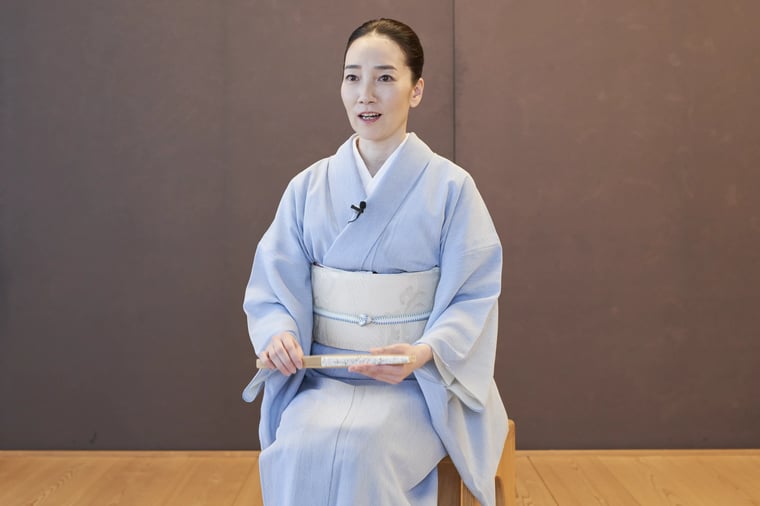
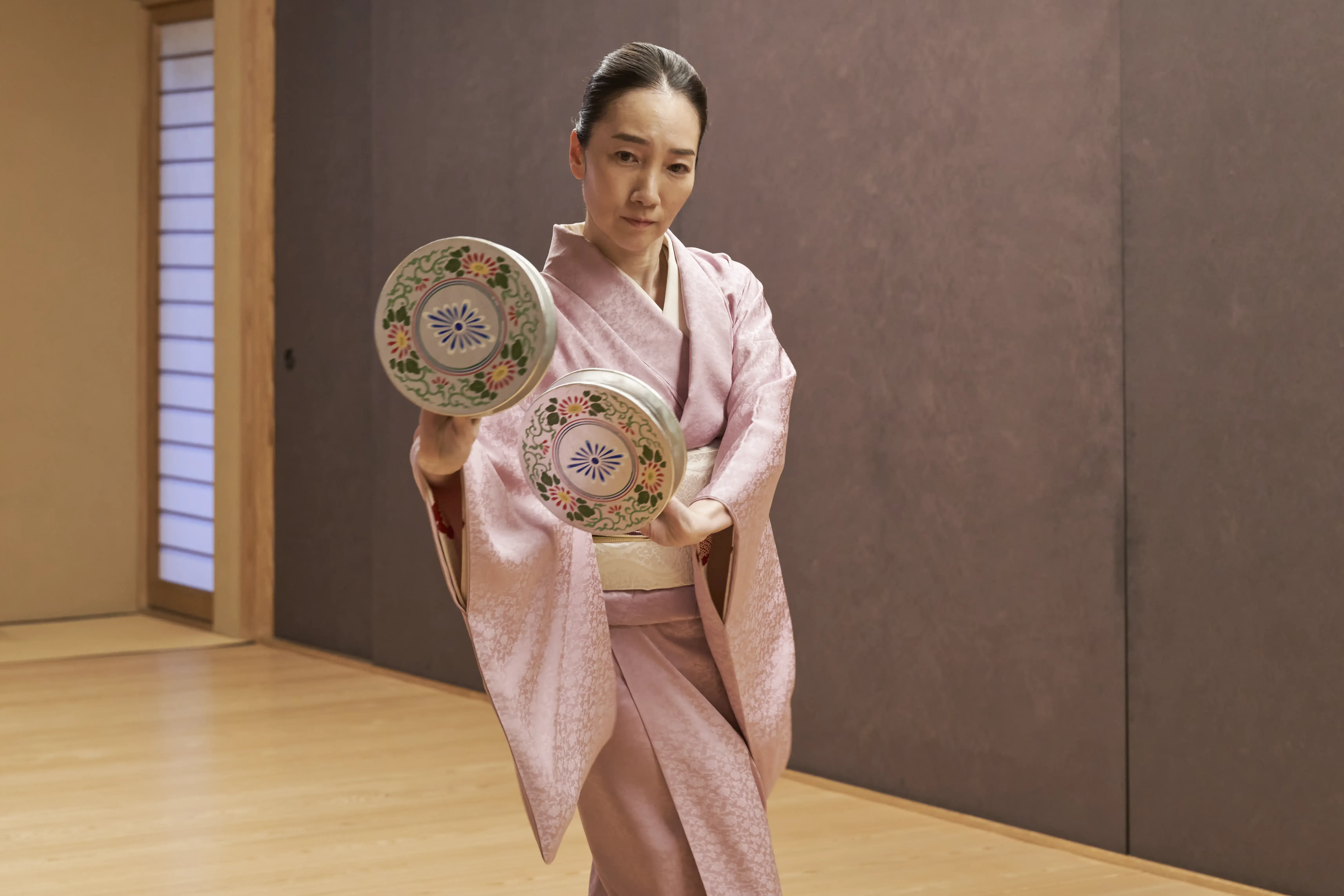
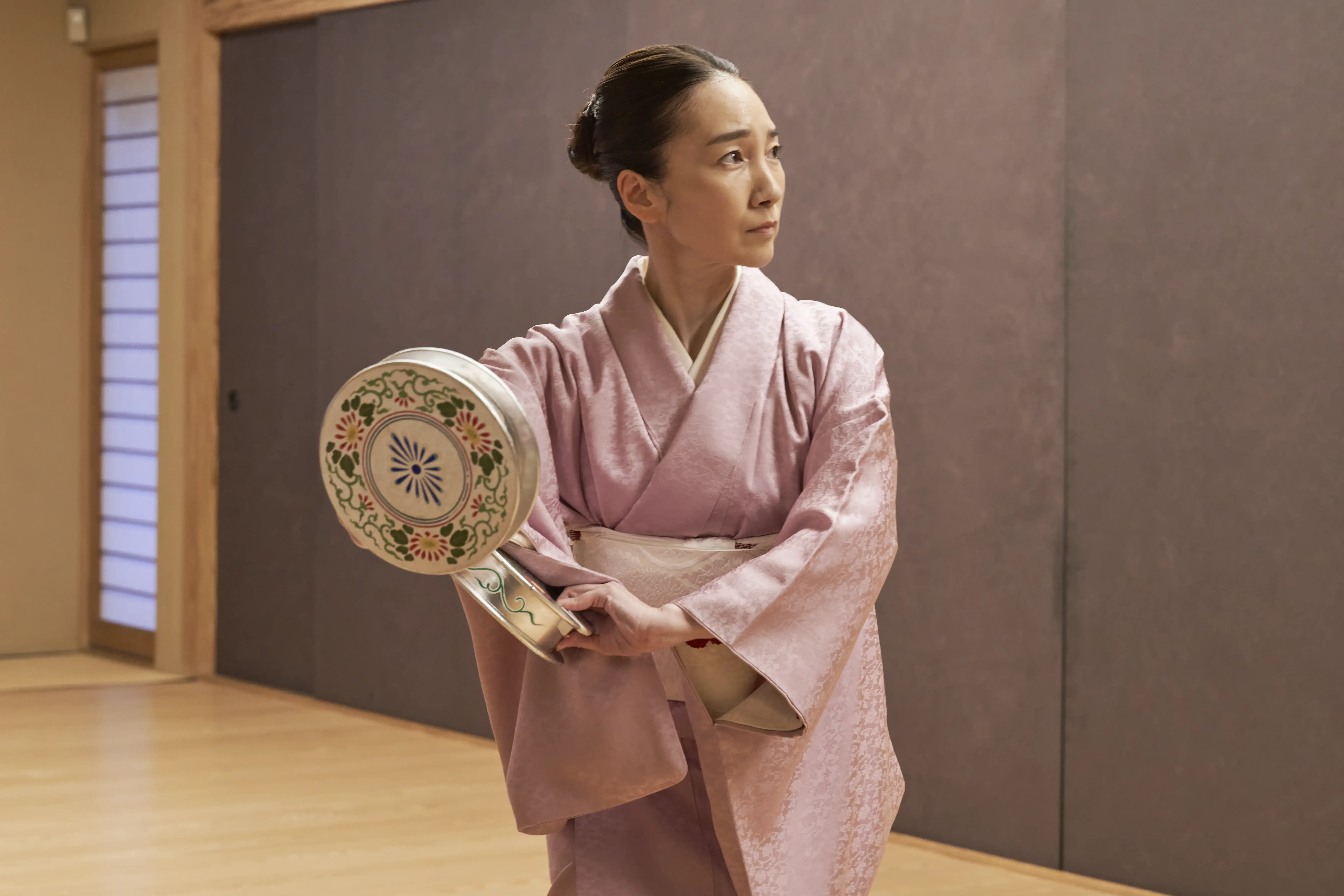
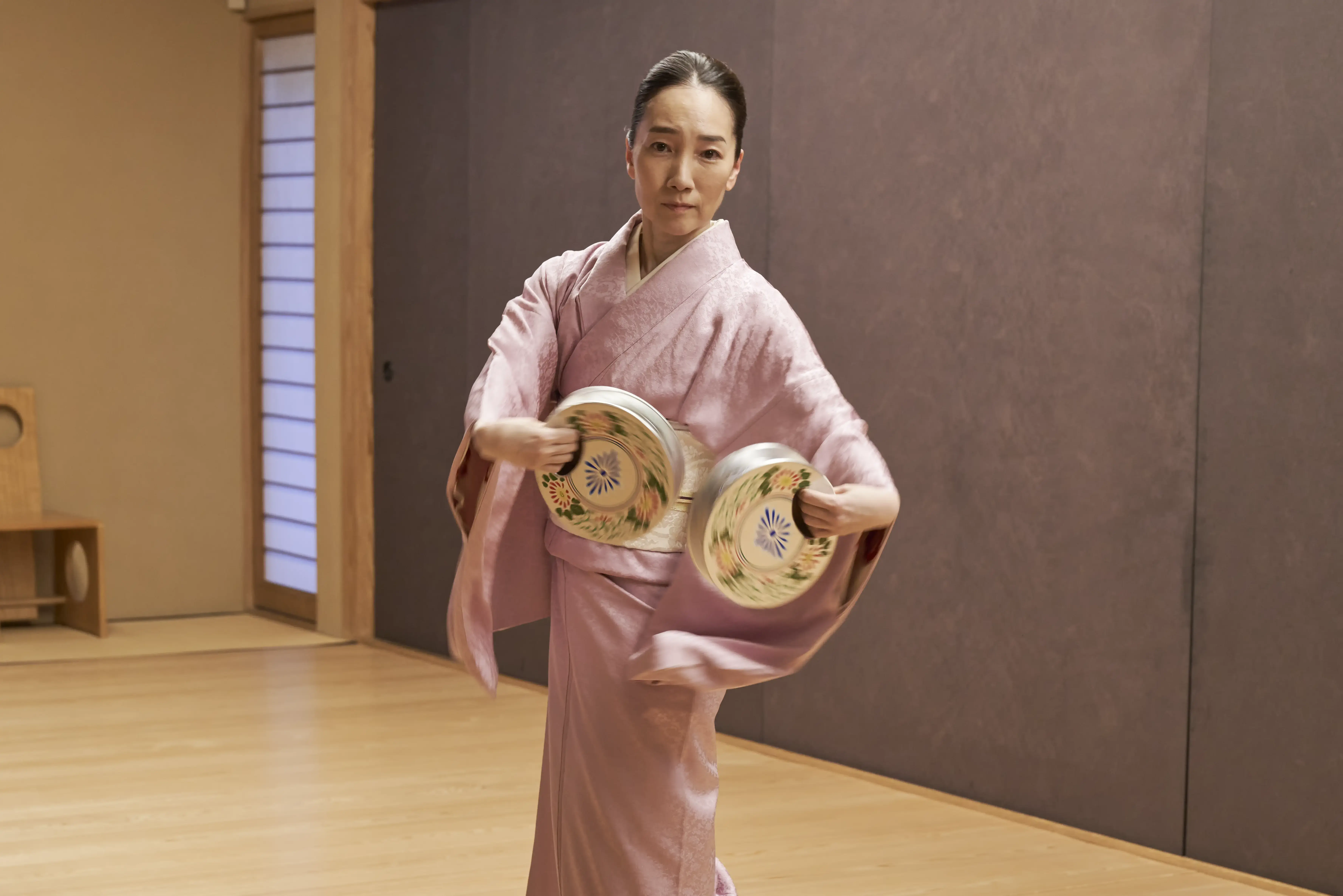
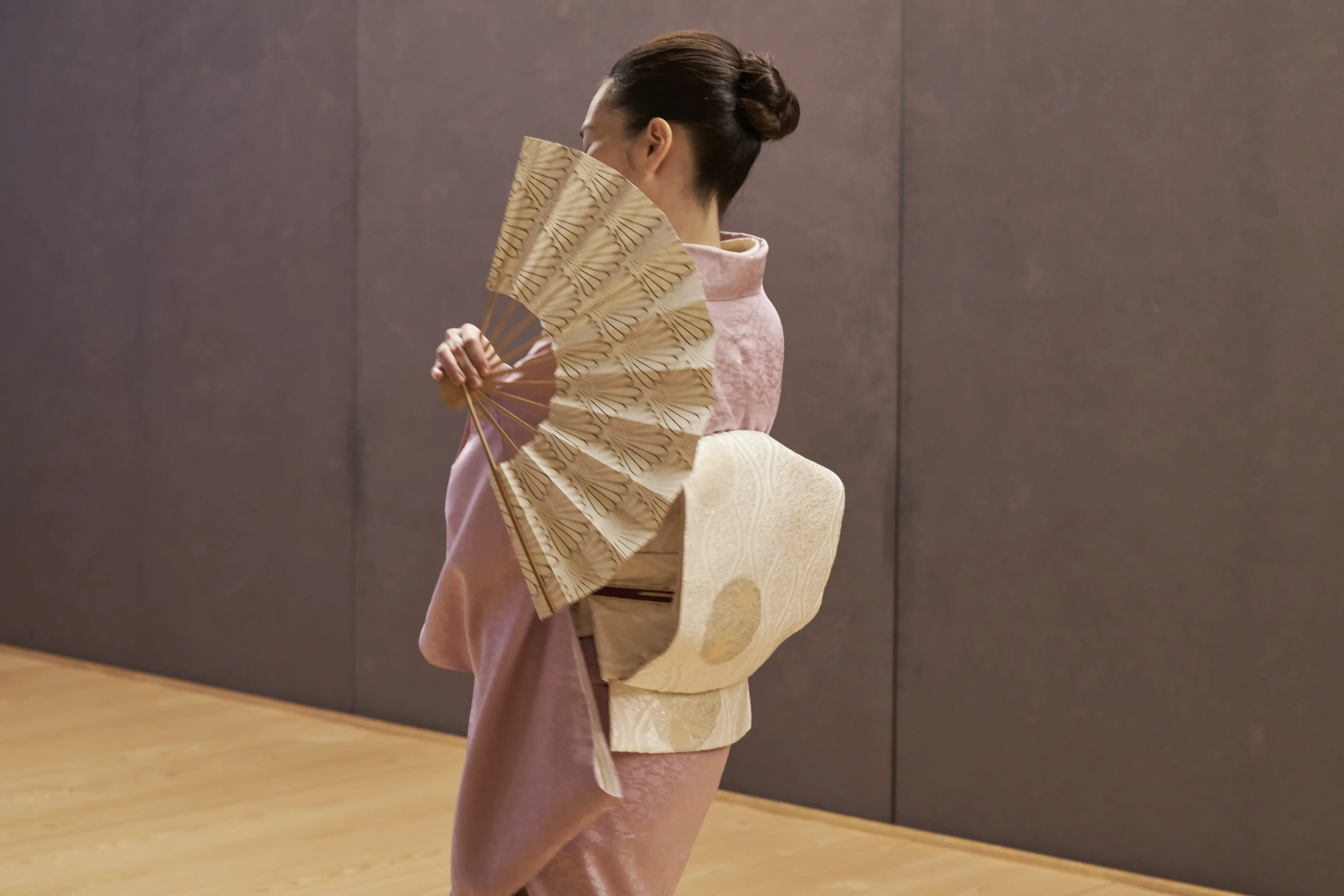
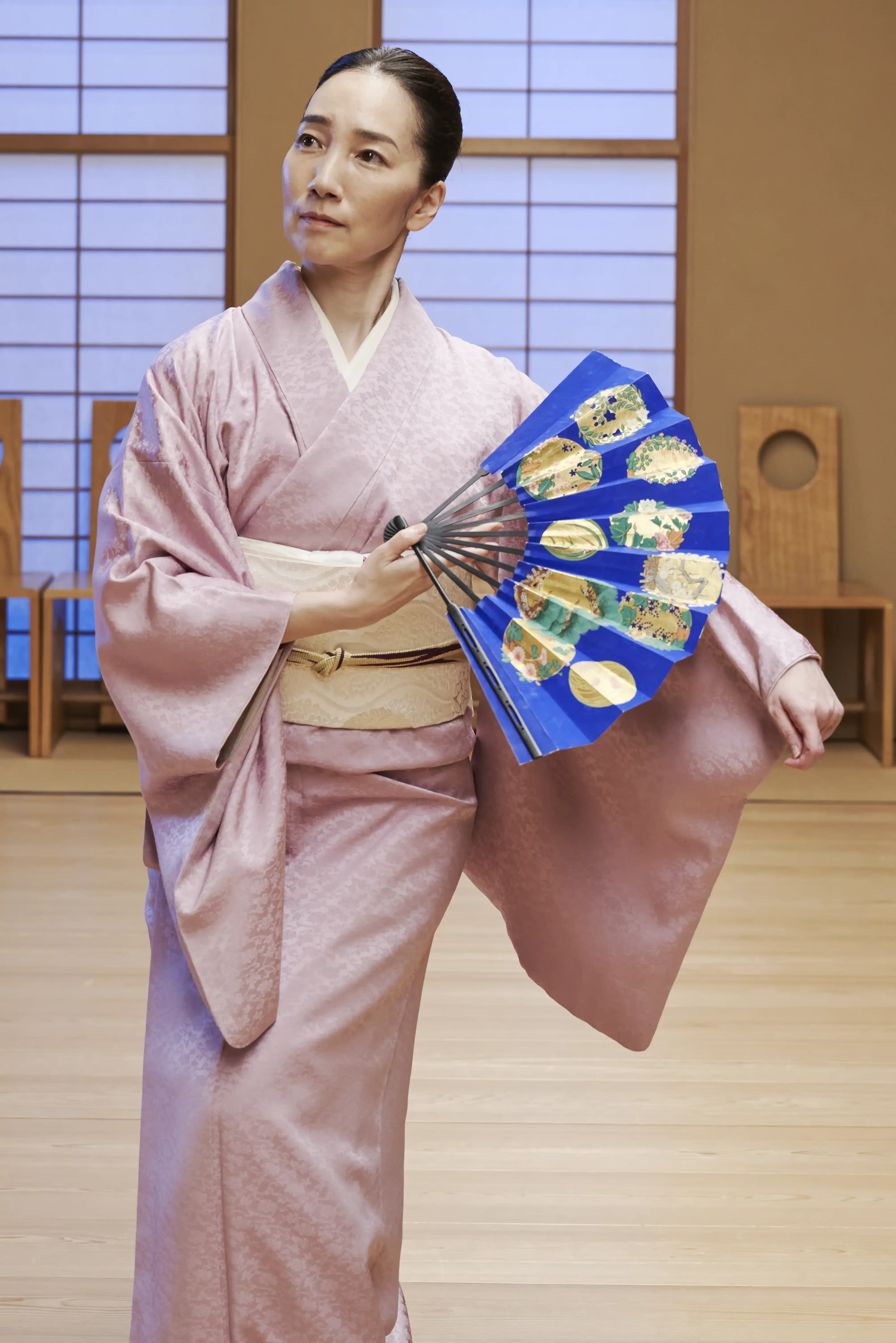
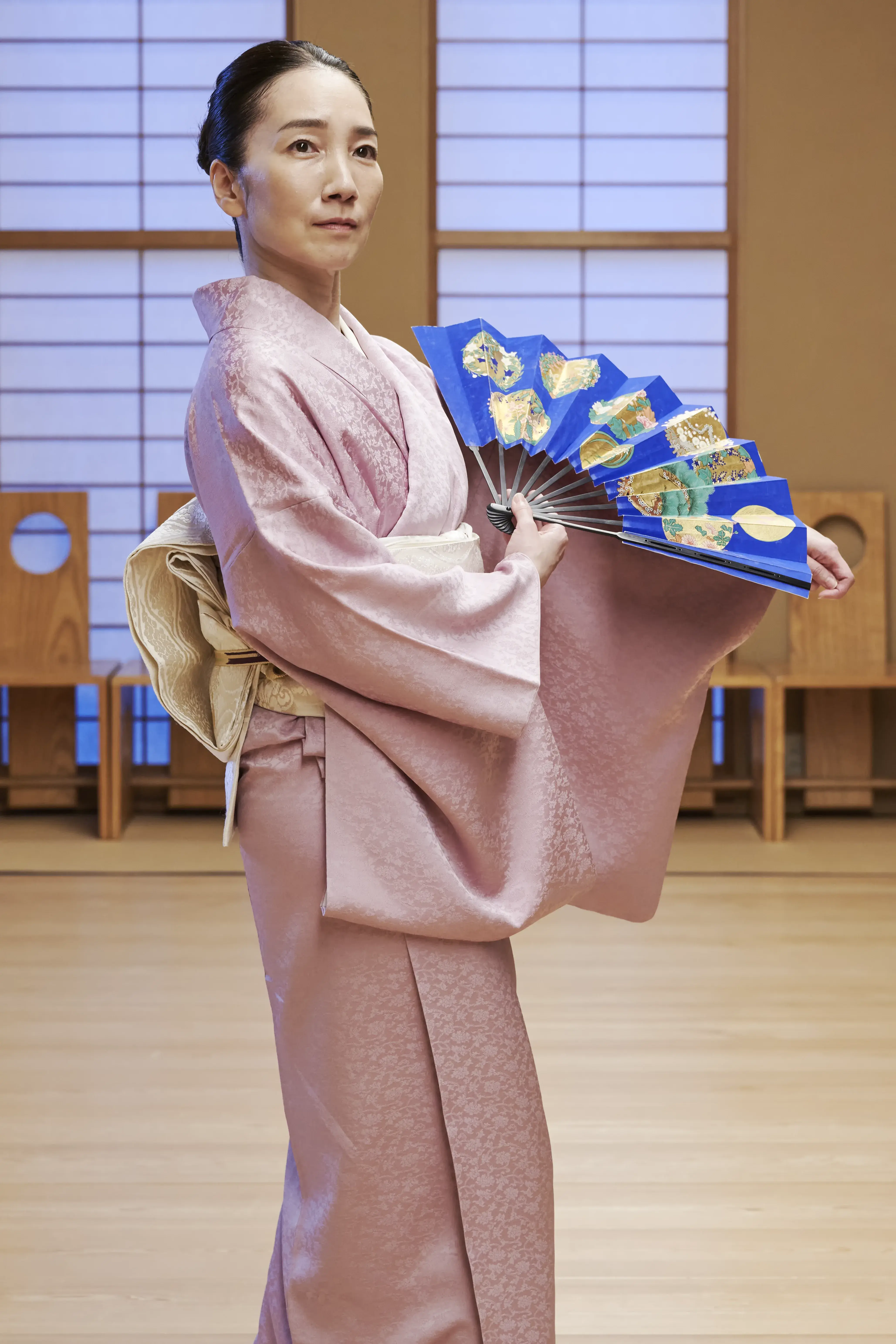
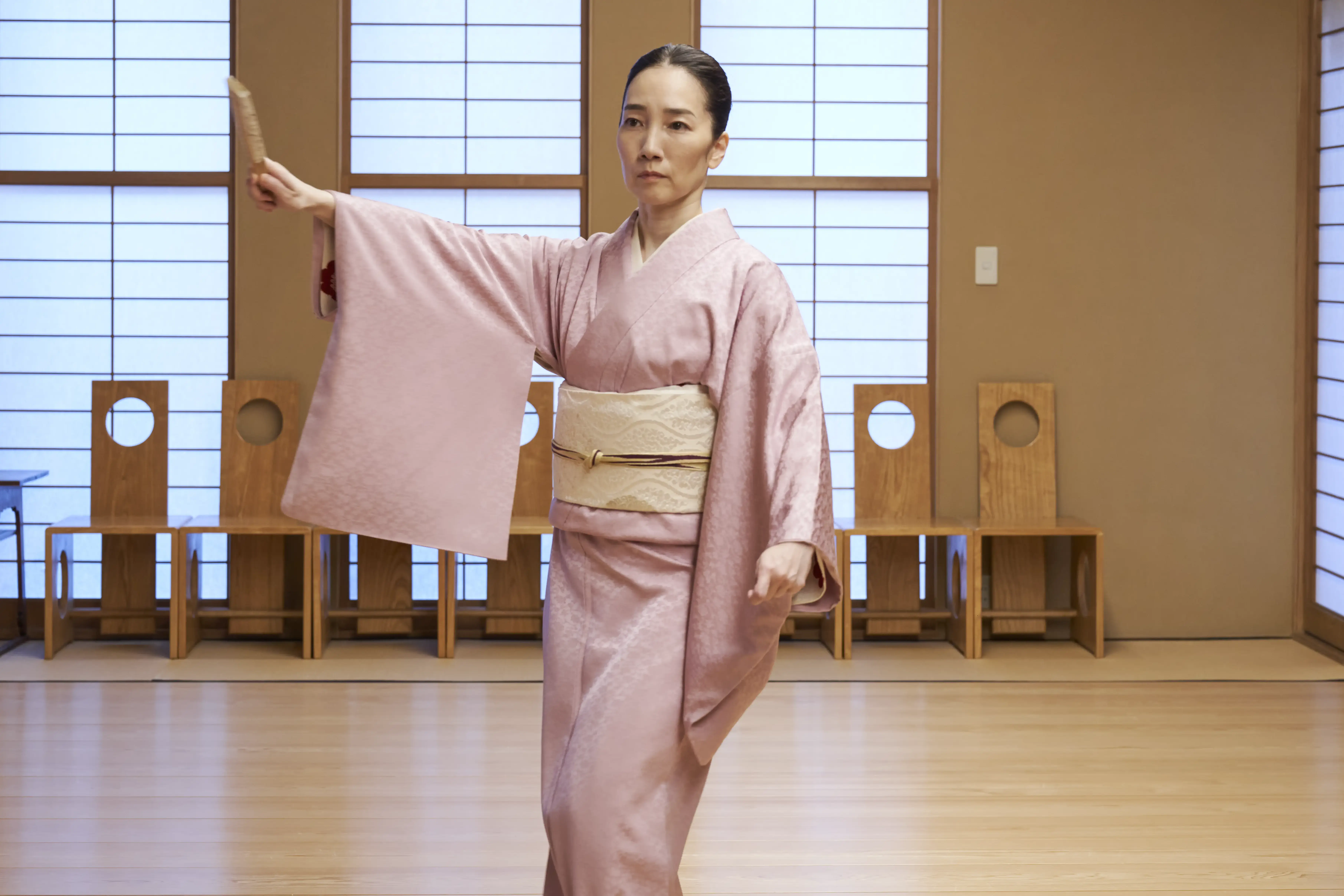
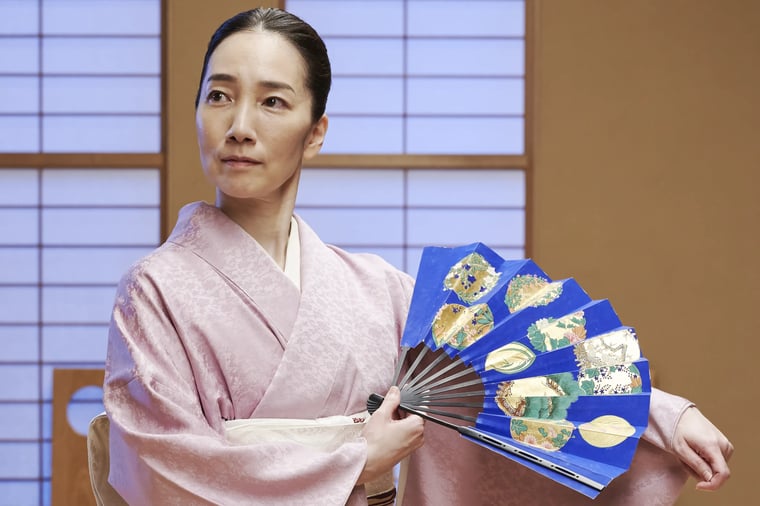
Yukari: The fan expresses so many things. Gazing at cherry blossoms, and then they scatter; catching their scent, gazing at them again in their beauty. Snow falling. The sound of an insect drawing near, then slipping away just as you try to catch it. All of that scenery, and the descriptions of feeling too, are expressed through this object. There are a great many pieces set to lyrics about the four seasons of Japan, so the choreography for depicting landscape is rich. In Kabuki, several performers might play out different roles; in Nihon Buyō, one dancer plays all of them alone. I think that, too, is a distinguishing feature.
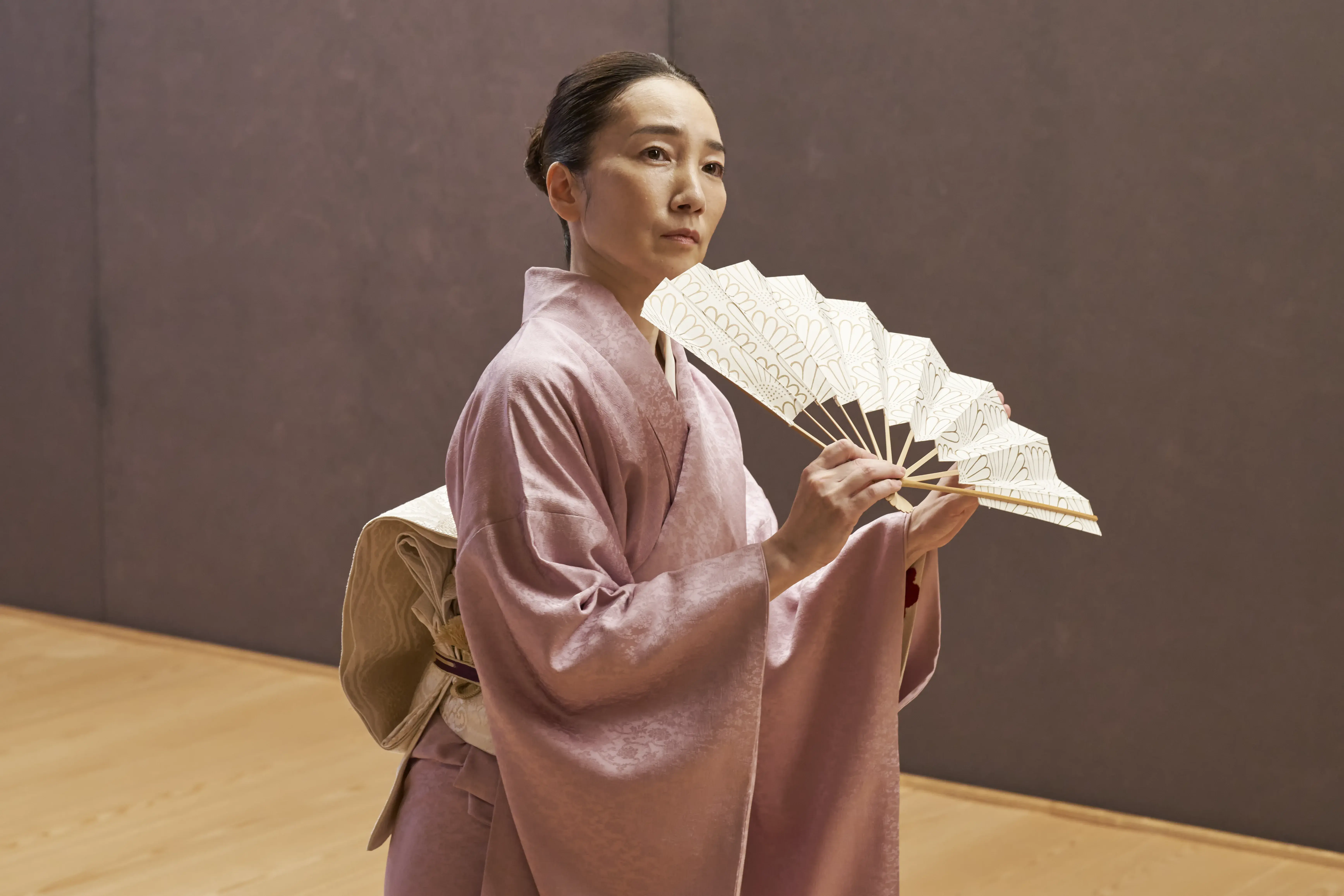
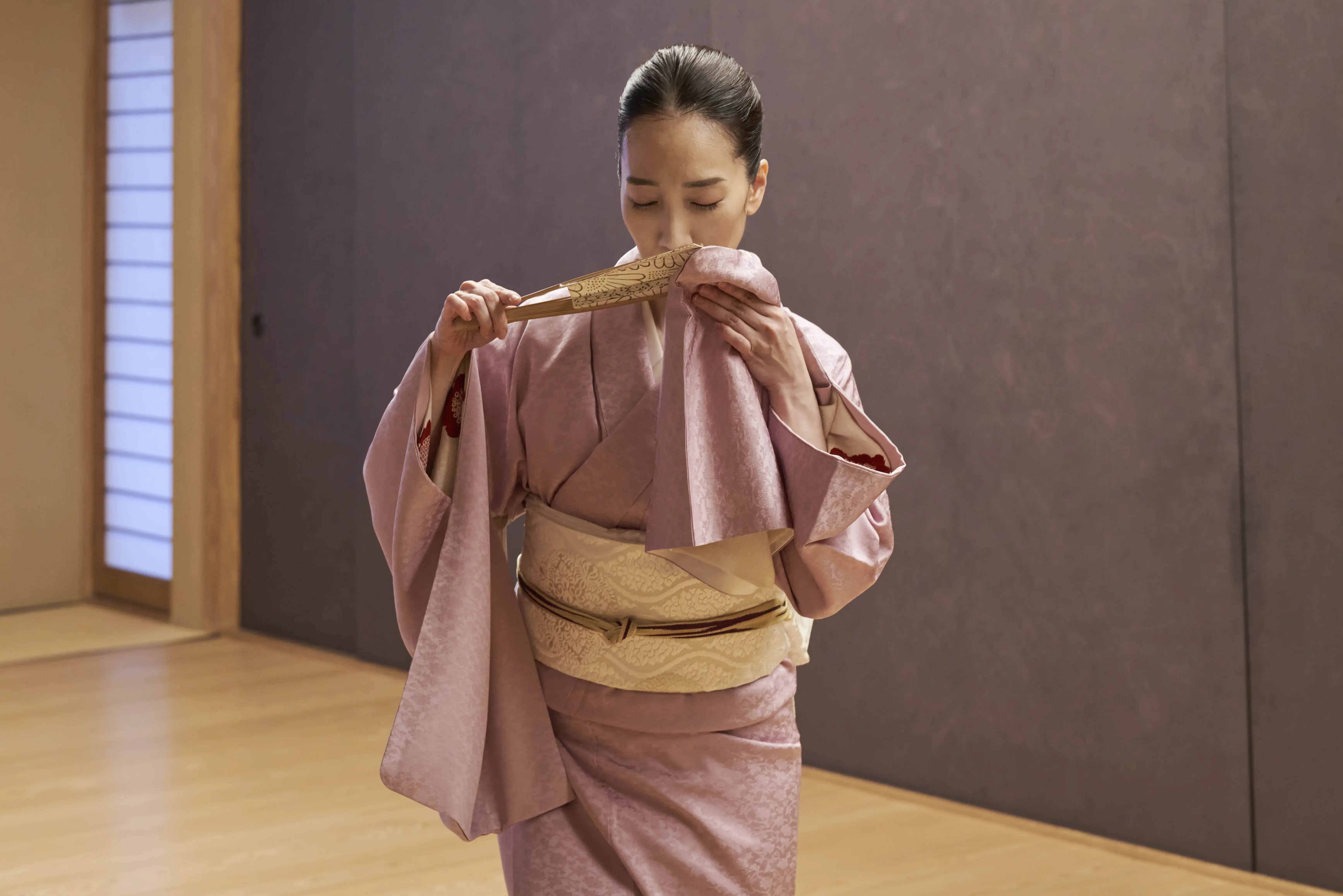
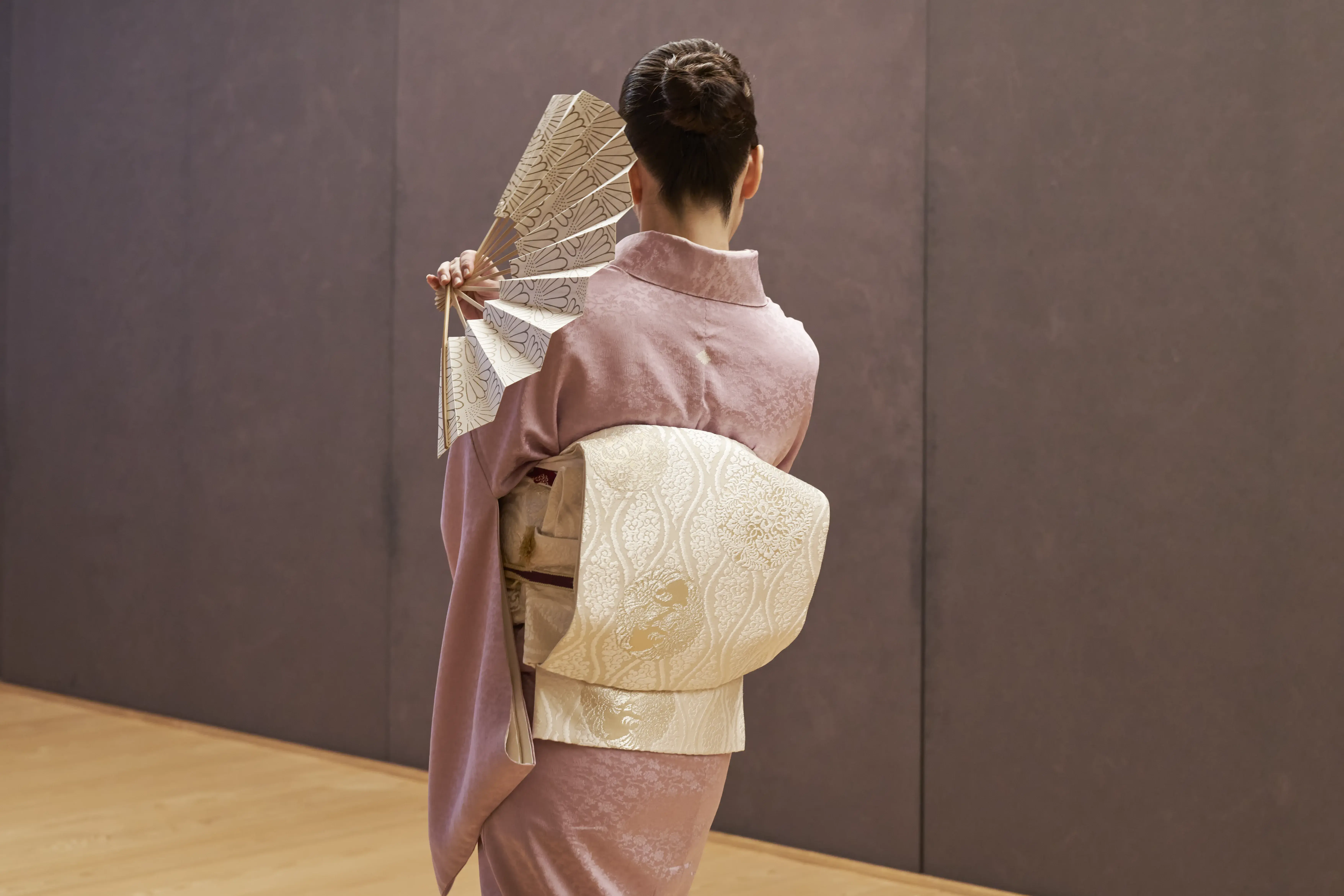
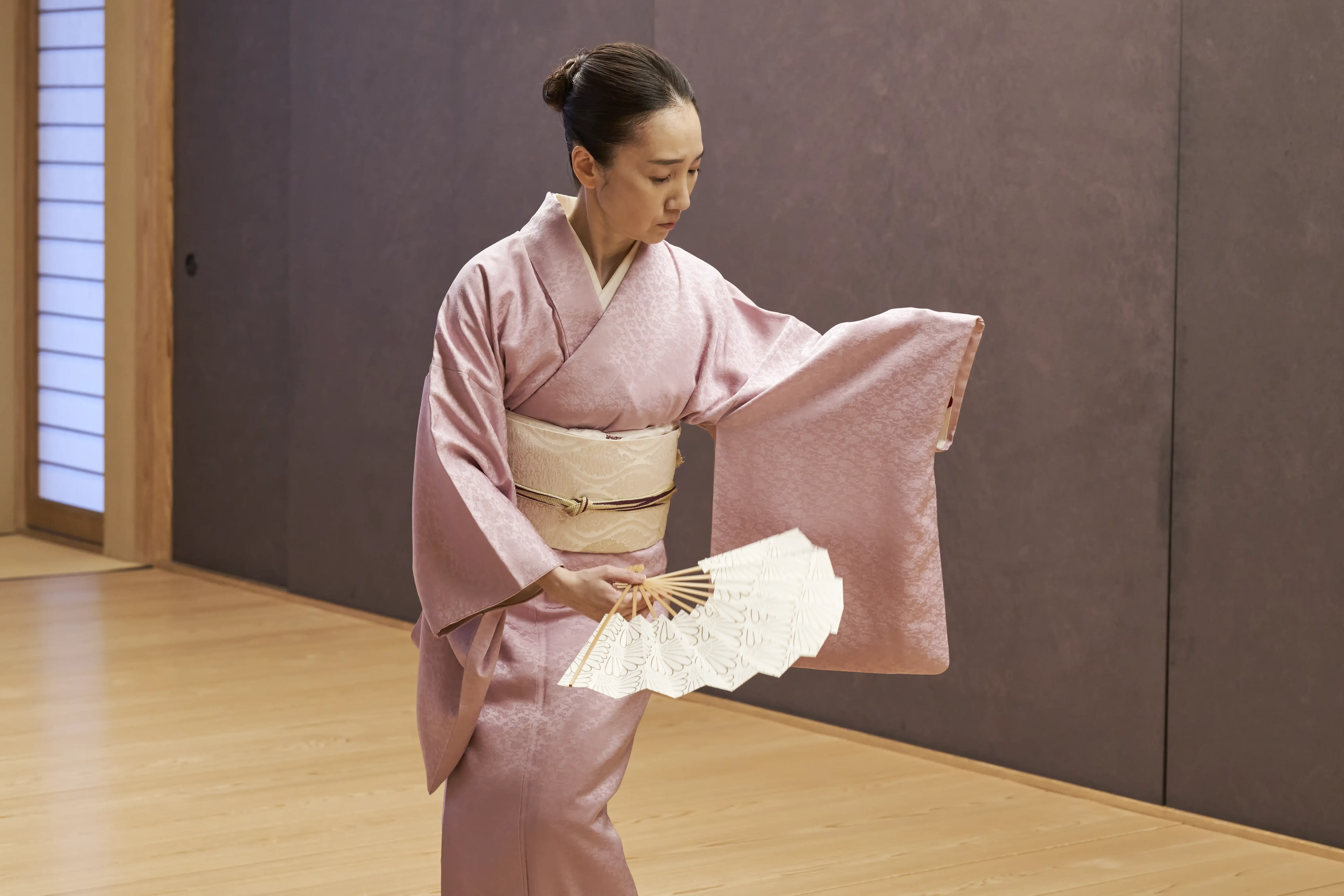
That fan is not a mere prop. It also carries the meaning of a yorishiro — an object a deity is believed to descend into and dwell in.
Toguri: I understand that fan is treated with particular care in practice as well.
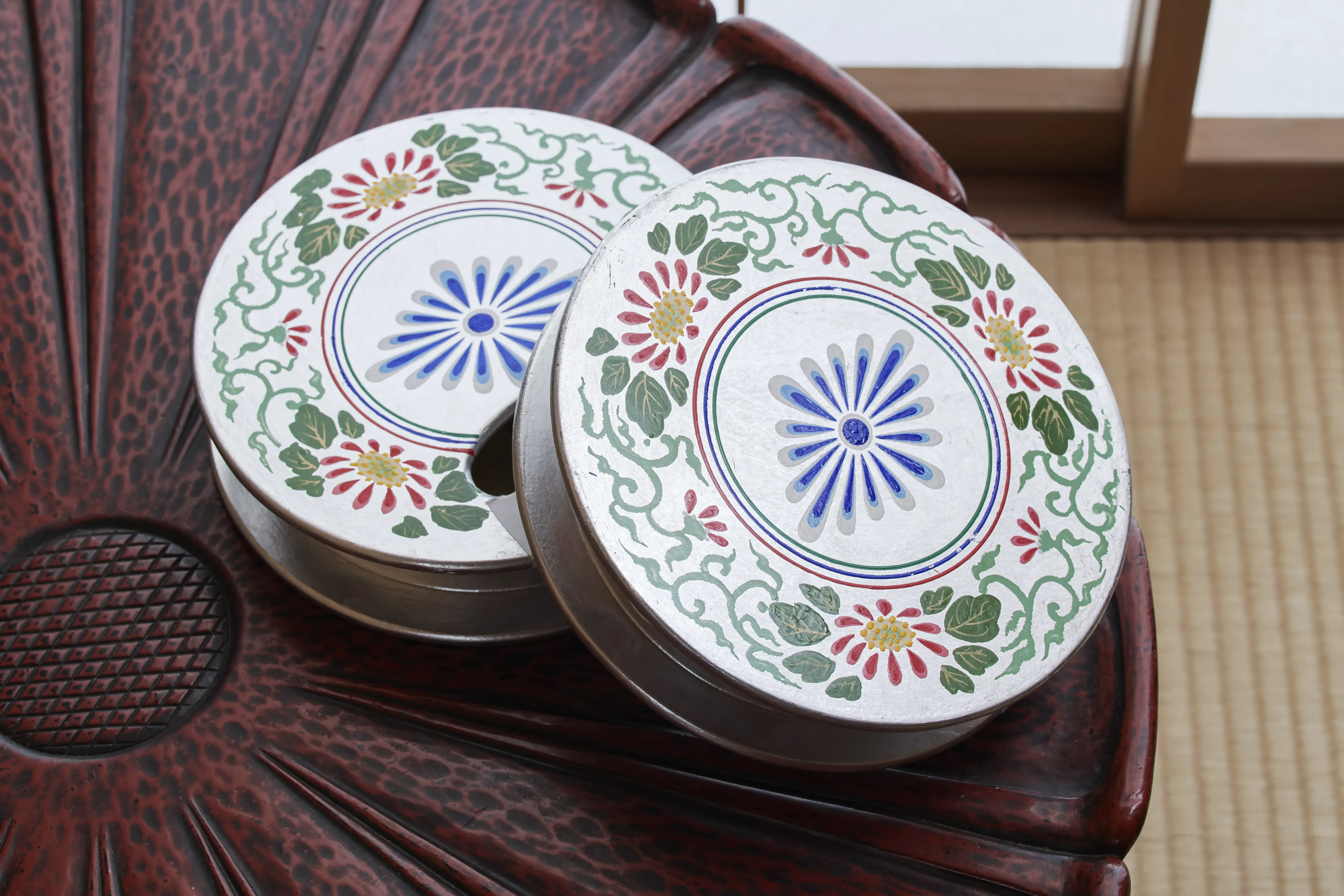
Yukari: In practice, when we bow, we always place the fan in front of us. This creates a kekkai — a sacred boundary, a symbolic boundary marking off a sacred, respectful space — between ourselves and our teacher, or the gods, and shows a respectful heart. The fan used in dance also carries the meaning of a yorishiro, a vessel in which a god may dwell, so we never use it to fan ourselves. We are taught never to set it down carelessly, or step over it. It is to be treated with the greatest care. I believe this is shared with Noh as well — a value common across Nihon Buyō.
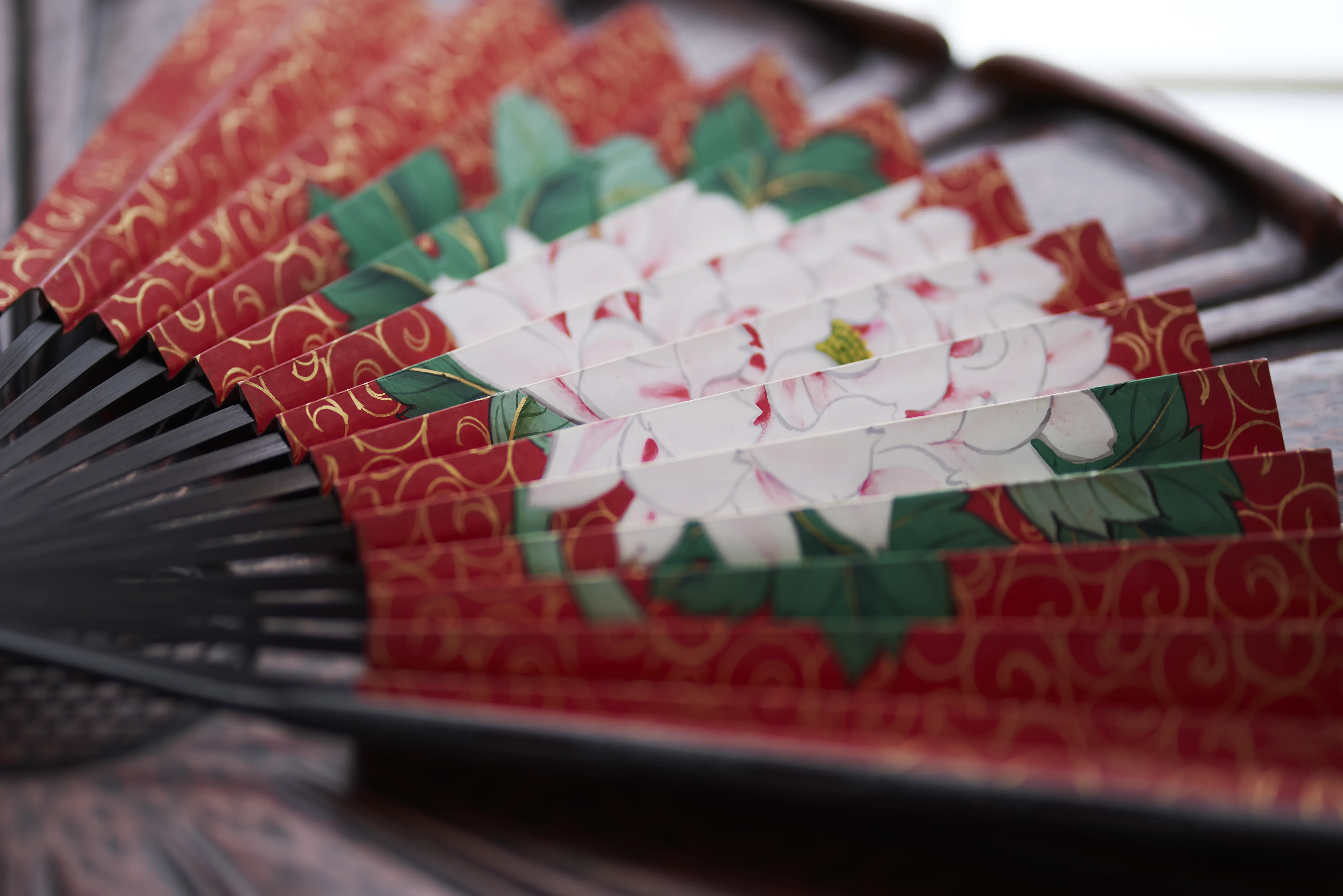
Toguri: I understand a hand towel is used in "Dōjōji."
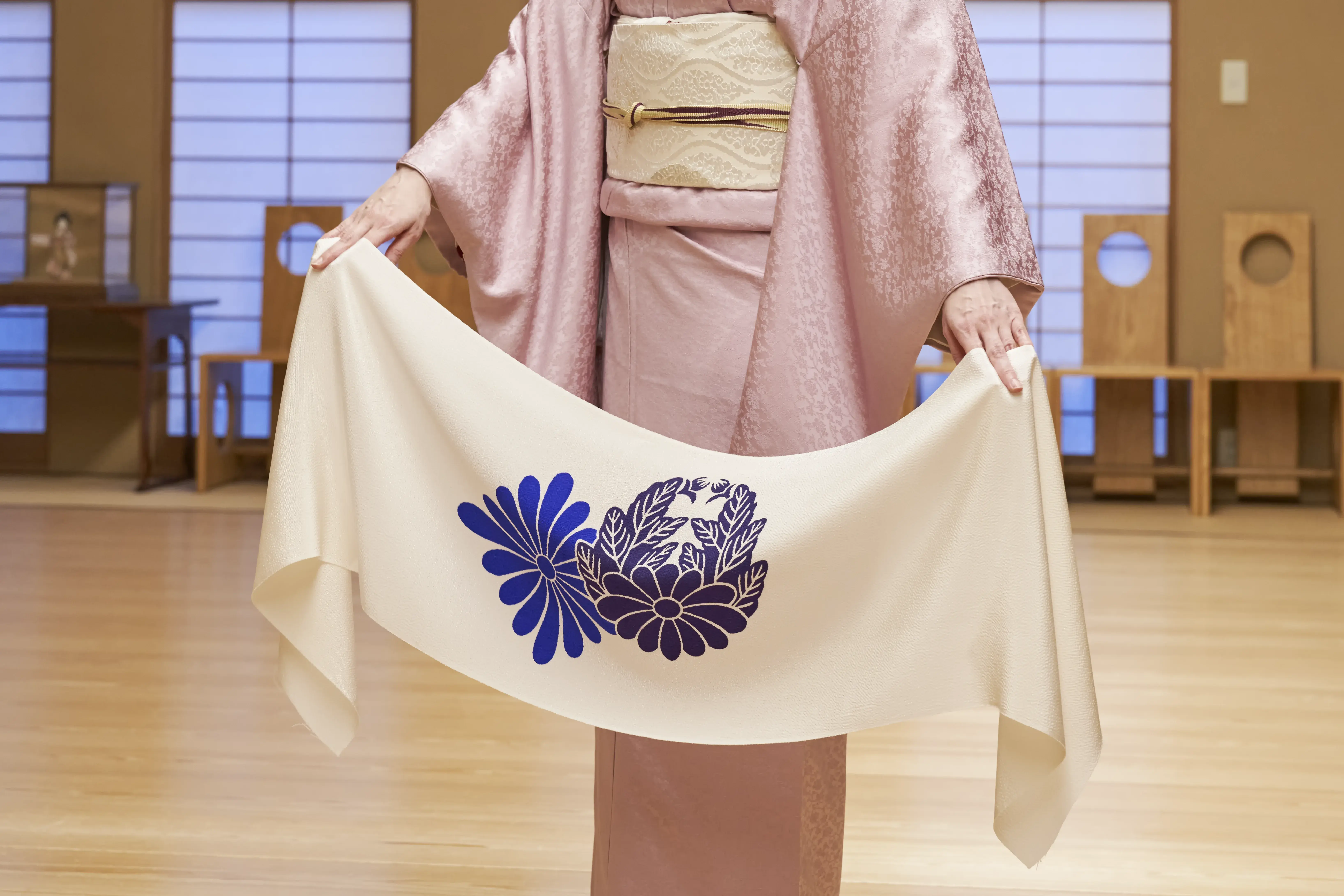
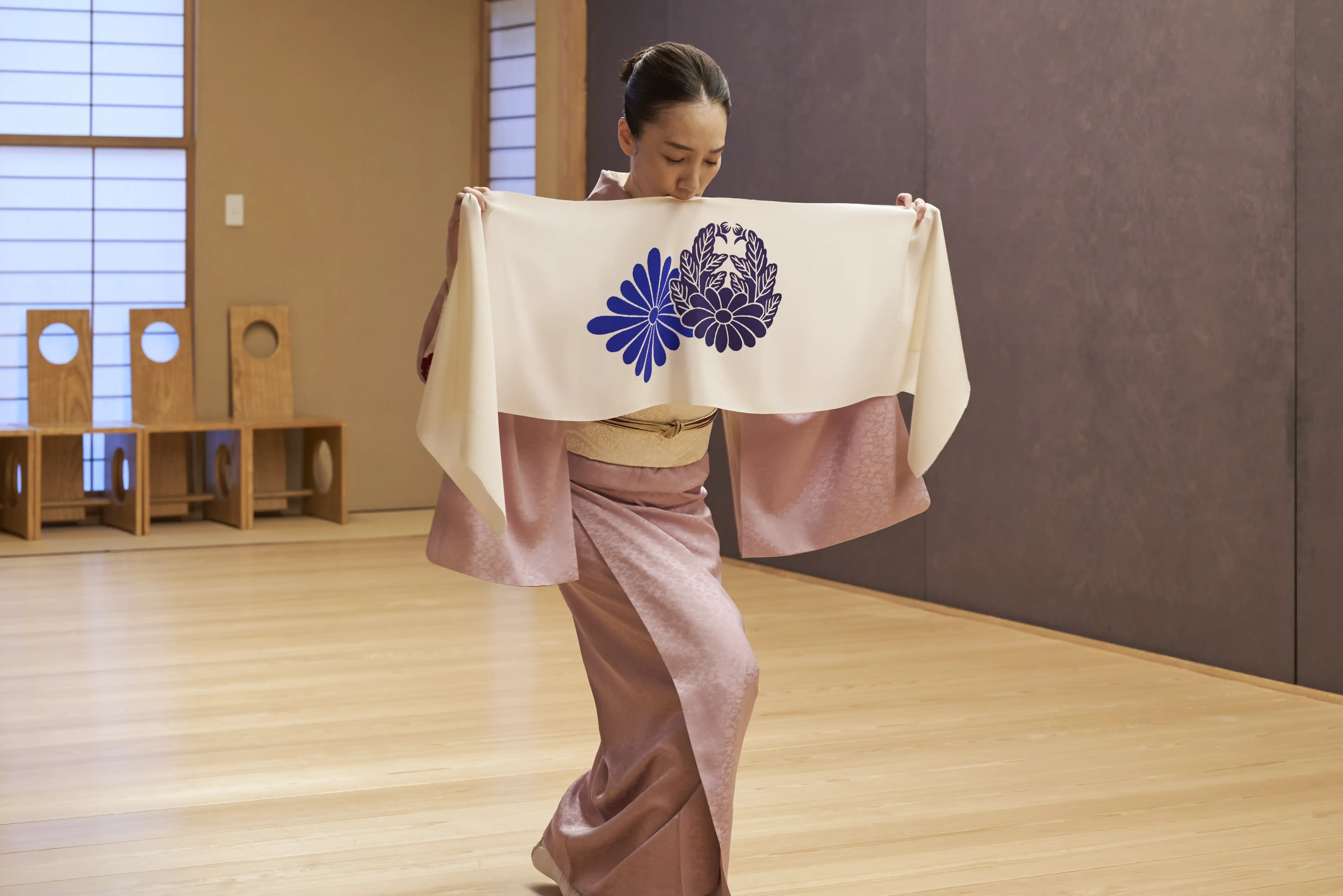
Yukari: The tenugui is a prop in Dōjōji. It's used in the scene "Koi no Tenarai," and the one I use when I dance "Musume Dōjōji" is the very towel my father once used when he danced "Ninin Dōjōji" with the then-head of the Onoe family, Onoe Baikō. It bears two family crests: the kikubishi — the Onoe school's chrysanthemum crest — and Baikō's crest, the gyōyōgiku. I was kindly given permission to use it, and I still have the privilege of using it today. I feel its difficulty every time I dance it, but it's a wonderfully bright, beautiful piece of music. It's an important work I want to keep dancing again and again.
Toguri: Could you tell us about the word "suodori"? What's the difference from the splendour of Kabuki?
Yukari: Suodori simplifies Kabuki's large-scale sets and lavish costumes to focus more purely on the dance. Today the staging has become quite varied — sometimes dancers wear a wig, style their own hair close to the role, or dance in costume closer to the character. The simplest form is dancing without a wig, without white makeup, and without any costuming for the role. There are many kinds of suodori now, but what they share in common is that everything is expressed through the dance alone.
Toguri: Is there anything that serves as inspiration for your dance?
Yukari: My father often presented new works of Nihon Buyō alongside the classics, performing with artists from outside Nihon Buyō, or choreographing Nihon Buyō to classical music. I grew up watching that. So I do actually dance to classical music too, and there's a spark in that. Watching ballet, or performing alongside ballet dancers, broadened my perspective. Both what differs from Nihon Buyō and what it shares are stimulating to me. My father often said, during practice, "use centrifugal force," "use gravity." The Onoe school has many rotating movements, so it's about how you show your hands while turning. Figure skating packs all kinds of interesting movement into four minutes, and the hand movements are fascinating too. For a time I recorded everything and watched it closely. I've taken movements I found beautiful and folded them into my own work.
The fan paints the seasons, holds a god, carries the crest of a house. To touch it is to touch something sacred and a family's history at the same time.
Inside the Keiko-ba
It is in the keiko-ba — the studio where lessons and rehearsals take place — that these tools live and breathe. A single photograph, a great many old cassette tapes. Layers of time fold over one another in this one room.
Toguri: What kind of place is this?
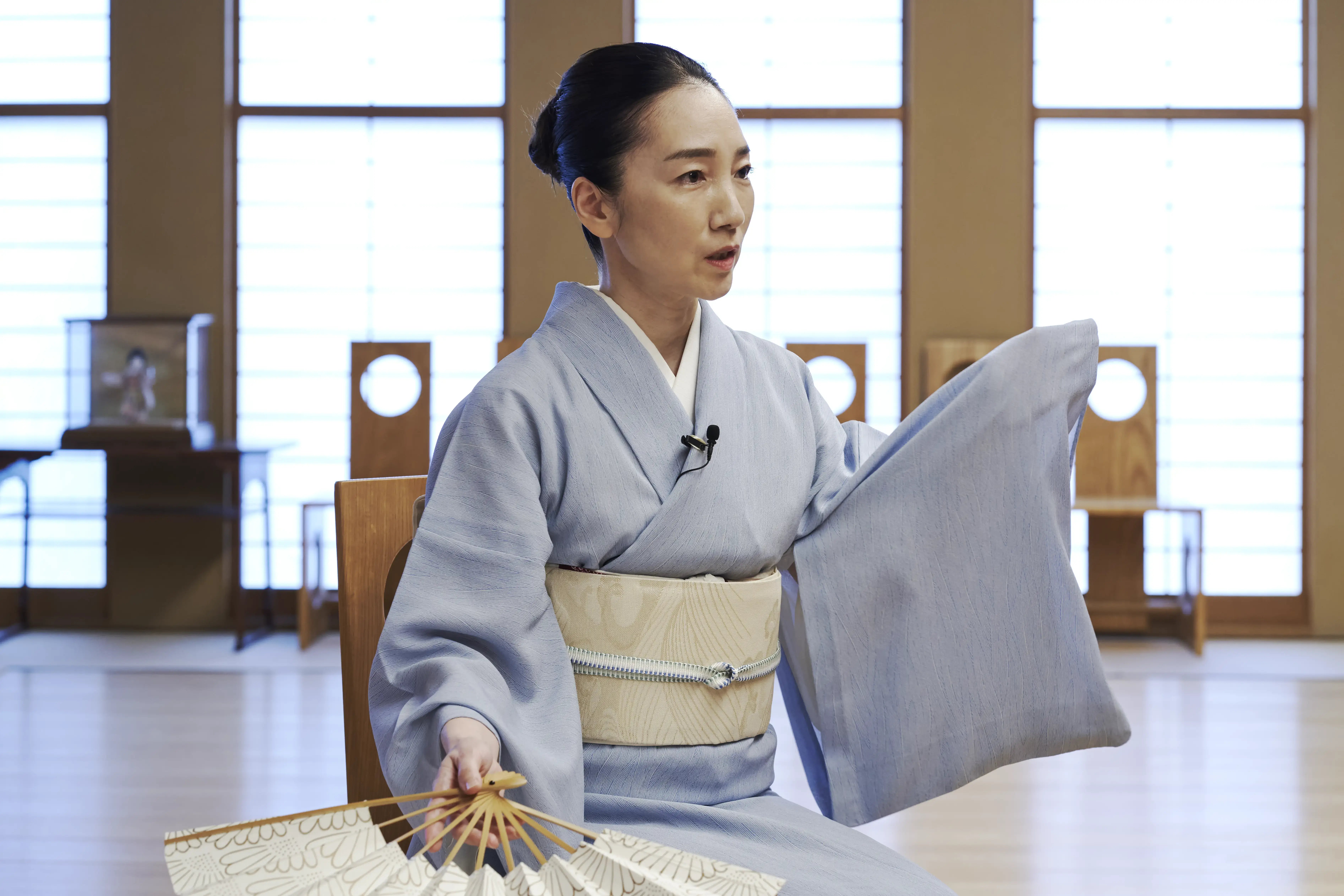
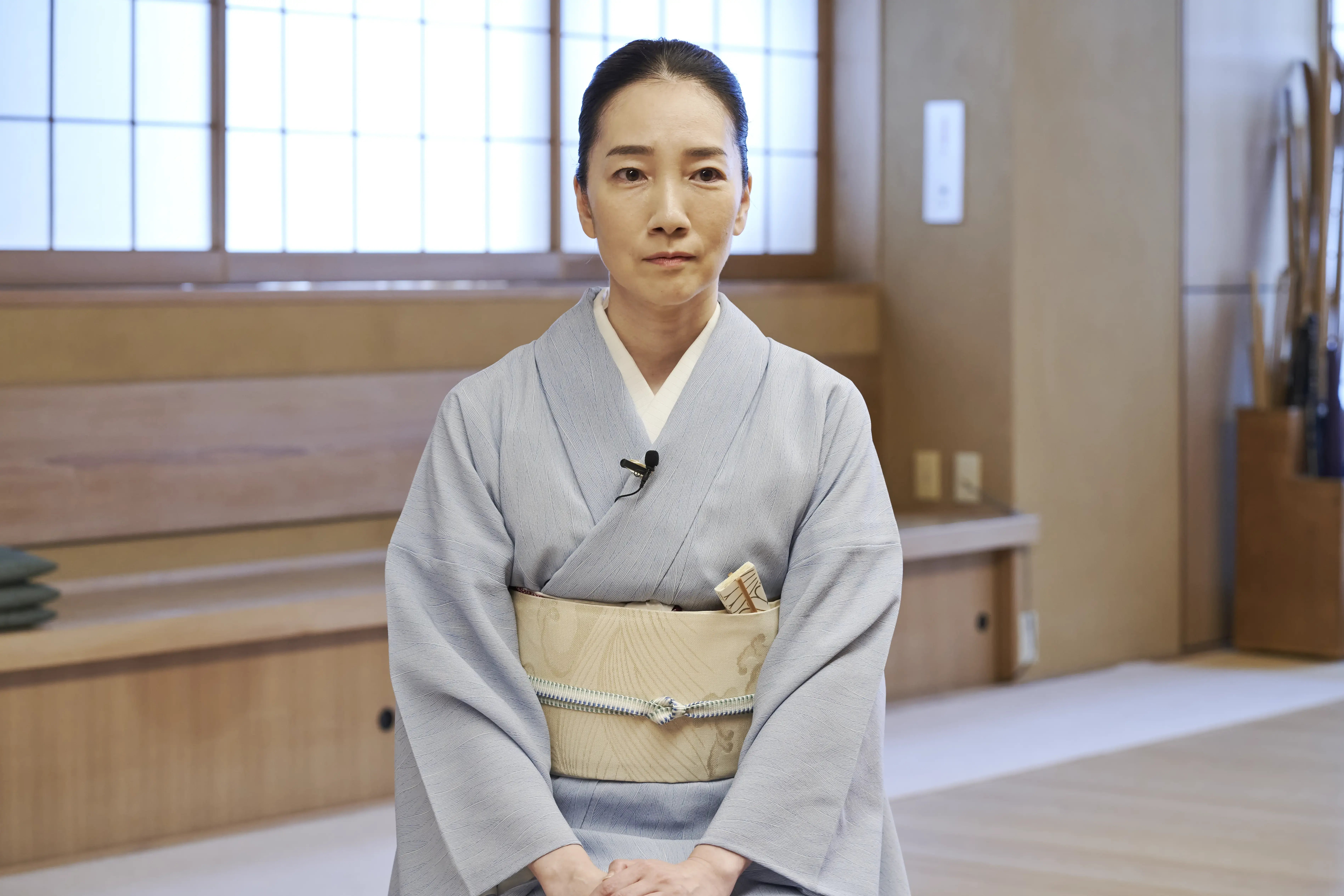
Yukari: This is the Onoe school's keiko-ba. On practice days I'm here, and my students come. We line up and practice dancing together. For beginners, it starts with learning to wear a kimono. How to open the sliding door, how to enter, all of that together. You come in, bow, open the fan, learn to stand and sit, suri-ashi — gliding steps that brush across the floor. Once we move into the music, we sometimes practice lined up, sometimes facing me at the front, mirroring.
Toguri: What are those cassette tapes used for?
Yukari: They're cassette tapes recorded over many years, of actual practices and performances, and I still treasure them as an essential sound source for practice today. In performances, we actually have musicians play live. What remains on the cassettes are old performances, and I use them daily for practice. It's also a bridge — carrying the timing and breath of those who came before, preserved in performances of the past, into the bodies of performers today.
Among the cassettes are the voices of musicians who are no longer with us, musicians Yukari herself can never meet again. The keiko-ba is also a place where the sounds of the past and today's practice quietly overlap.
Toguri: I imagine the first thing people notice on entering here is that photograph.
Yukari: That is my grandfather, Onoe Kikunojō I. He had already passed away by the time I was born, so I never met him. Older students of his say he was extremely fearsome. But my mother, too, was his student, and studied under him as a child, and she says he was very kind. Some people have told me that as a granddaughter, he might have been even gentler with me. I always regret that I couldn't see his dancing directly. My given name, Yukari, is written with the character for "friend" — the same character used in my grandfather's given name, Tomokichi. I like to think there's a connection there.
She is connected to a grandfather she never met by a single character in her name. The name of the iemoto passed to her brother, but Yukari too is certainly bound to this house, in her own way. The keiko-ba is a place where these many layers of hand and voice have quietly settled.
Dignity, Freshness, and a Form That Breaks by Itself
What supports both the technique and the place is a single aesthetic sense, and a single prayer. The core of the Onoe school, in her own words.
Toguri: Could you tell us about the artistic character of the Onoe school?
Yukari: We carry on the maxim of the sixth-generation master, centred on dignity, freshness, and the unexpected. Dignity is dignity that is present without being imposed. As the word suggests, it has dignity while never pressing itself on you — something very natural. Though it's different from being relaxed; it's a naturalness that still holds tension. Freshness — being refined, and being new. And then the unexpected. As you repeat practice, increasing the volume, raising the quality, learning the kata — the codified forms mastered through repetition — that form gradually becomes part of you. And once it has become part of you, rather than trying to break the form, the form breaks naturally by itself, and you become free. I feel the unexpected in that.
— Yukari Onoe
Kata is not something broken by force. At the far end of accumulation, it comes undone on its own. The same posture shows itself in her tools, and in her everyday frame of mind.
Toguri: I understand you keep some distance from the word "kodawari," particular attachment.
Yukari: It isn't that I have no attachments — if anything, I'm particular about a great many things. But when you become too attached to something, there are things you stop being able to see. I want to let go of unnecessary attachment. My father influenced me strongly on this point. Being too attached to any one thing can get in the way of seeing things with fresh, new eyes, and I don't much like that. I always want to keep my heart open, keep my field of view wide, look at all kinds of things flatly, and absorb what can be absorbed. Of course I treasure attachment when it truly matters, but being attached to everything, indiscriminately, feels wasteful to me.
What gave this aesthetic sense its deeper emotional weight were several losses. The night before she first danced "Musume Dōjōji," at fourteen.
Yukari: My grandmother, who had always been the one most delighted by my dancing, passed away the night before that performance. My father called me during the stage rehearsal and told me not to tell anyone until the performance was over. I couldn't cry, couldn't tell anyone. I stood on stage with a feeling I had never tasted before. And there I was, dancing while thinking, I wanted her to see this. Nihon Buyō connects you to your audience, but I realised then that it can also connect you to someone you loved, someone you can no longer meet. Once I understood that, my whole body went numb. In that first "Musume Dōjōji," an even deeper resolve settled in me.
Toguri: I understand you also have deep feelings for the piece "Sagi Musume."
Yukari: If "Musume Dōjōji" is yang, "Sagi Musume" is a little more yin — something quieter, more damp with feeling. I had always been drawn to that mood, and it's a piece I wanted to dance of my own will. Whether in suodori or in full Kabuki dance style, I have danced it at every turning point — it's a piece I treasure deeply.
Later, when she saw her mother off as well, she turned again to dance. Out of that loss came a new work, "Shizuka."
Toguri: Could you tell us about your own new work, "Shizuka"?
Yukari: Choreographing in earnest actually came very late for me. I was so full with dancing and expressing that I could never quite settle into the resolve to choreograph my own work and dance it. At one point I had the chance to meet the lyricist Matsumoto Takashi privately. He's something of a legend in the world of popular song, and I know most of his songs. I hadn't really connected him with Nihon Buyō, but at a meal together with my mother present, the conversation turned lively — what if he wrote lyrics and we made a piece together. Nothing concrete was decided at the time. Then, after my mother passed away, in the middle of an overwhelming sense of loss, not knowing how to dance or where to find the energy, that conversation suddenly came back to me. I called him out of nowhere and asked him to write lyrics for a new dance based on Shizuka Gozen. He agreed readily. From there everything moved quickly — in under half a year I had the lyrics, the music was composed, I choreographed it myself, rehearsed, and danced it. NHK, Japan's national public broadcaster, featured it last year.
— Yukari Onoe
Toguri: What does dance mean to you, Yukari?
Yukari: I believe there is prayer at the root of dance. Something that connects you to the gods, to nature, to people. Dignity isn't simply about entertaining someone — it's something that makes the other person think. I want to dance in a way that connects people to that, through my dancing. That is the good dance I aim for.
Toguri: What do you feel when you stand on stage?
Yukari: Ordinarily, I tend to read the mood of the people around me. I spent a lot of time among adults, observing carefully. Being born into the house of an iemoto, with everyone praising me perhaps too much, there was a long stretch where I didn't know what or how to believe, how to take things in. I felt a kind of unfreedom in expressing my own emotions. My father's training was strict too, and we sometimes argued even while practicing. And yet, only when I stand on stage can I express myself without holding back. Even in practice, dancing is the place where I am freed. So I've come to think that dancing might be my calling.
Toguri: Has your feeling as someone who carries this on changed over time?
Yukari: In my twenties and thirties, I was so consumed with dancing that I had no room to think about passing anything on to the next generation. As I was asked to perform, and asked all kinds of questions, I gradually began to think of myself as someone in the position of passing things on. I used to think teaching wasn't suited to me, but when people asked me to teach them, and I began, I found myself watching my own dancing more objectively. My own habits, when a student I taught exaggerated them in their own dancing, were suddenly thrown back at me. In Nihon Buyō, you can still be called "young" even in your thirties or forties. Then, quite suddenly, people stopped saying that to me. I feel a little wistful about it, and my body aches in more places than it used to, but now, in my fifties, I'm at the age where I can dance the widest range — young roles, roles that age, men's roles too. Sometimes I'm asked for roles I once admired from afar; sometimes I still dance a young woman's role in a furisode. That's exactly why I want to dance as much as I can, and to pass on what I've learned to others.
Kata breaking naturally, becoming free. Dance as a prayer that connects the living and the dead. That core has not wavered now that she stands as someone who teaches. If anything, the act of passing it on is becoming a new form of connection in itself.
What You'll Feel with a Fan in Your Hand
That sense of connection has a door through which readers themselves can step. The experience offered here, in the keiko-ba.
Toguri: What kind of experience can people have here?
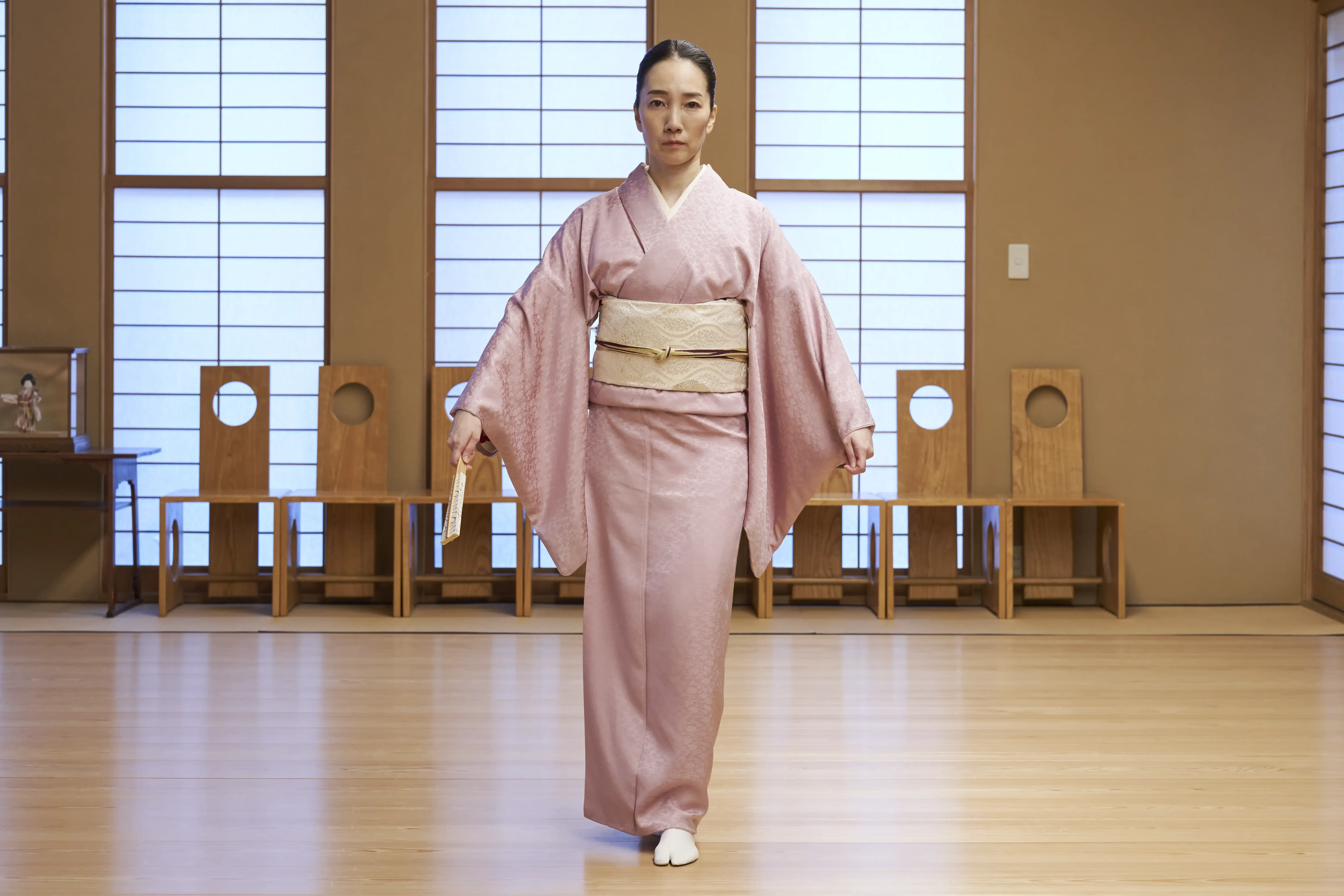
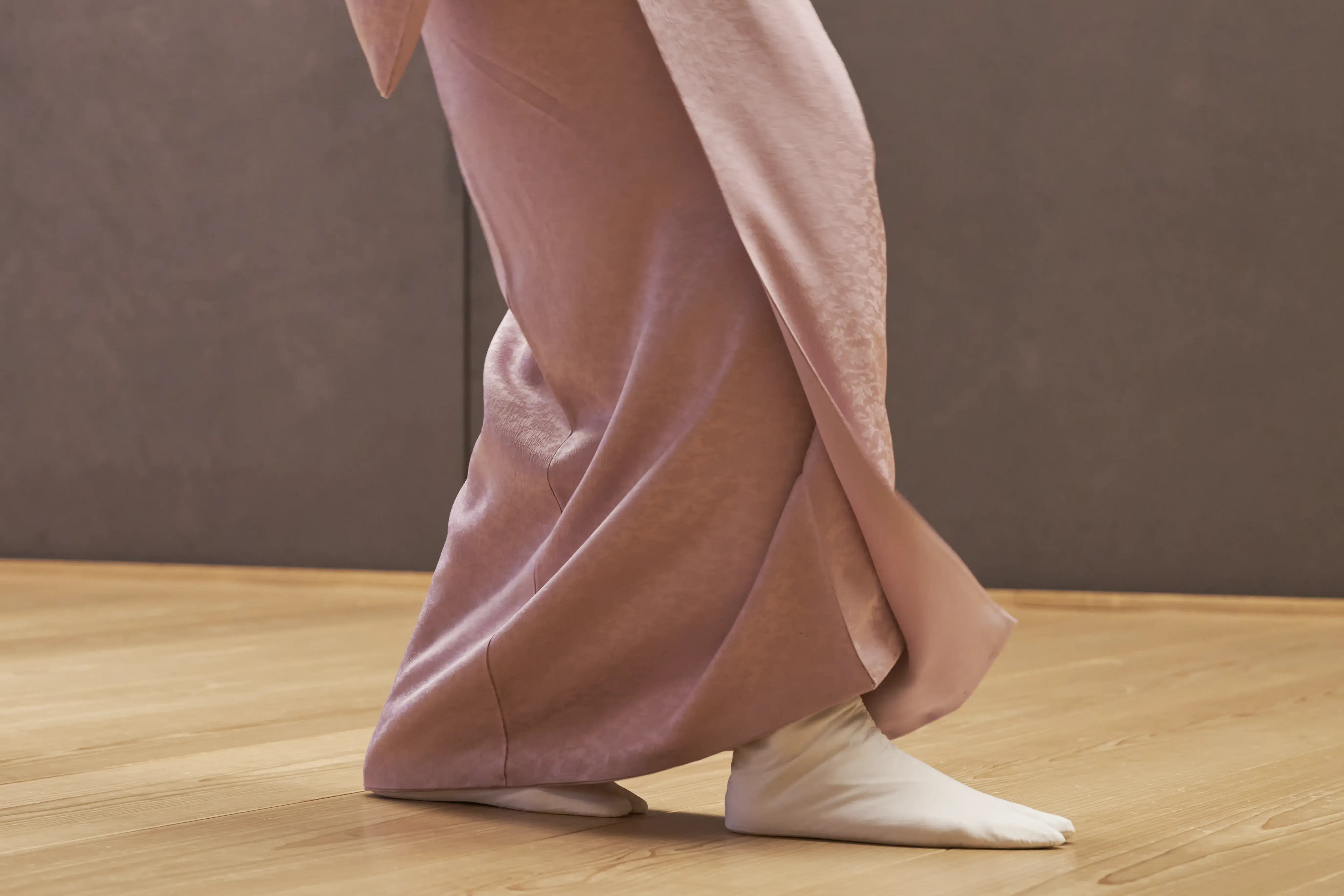
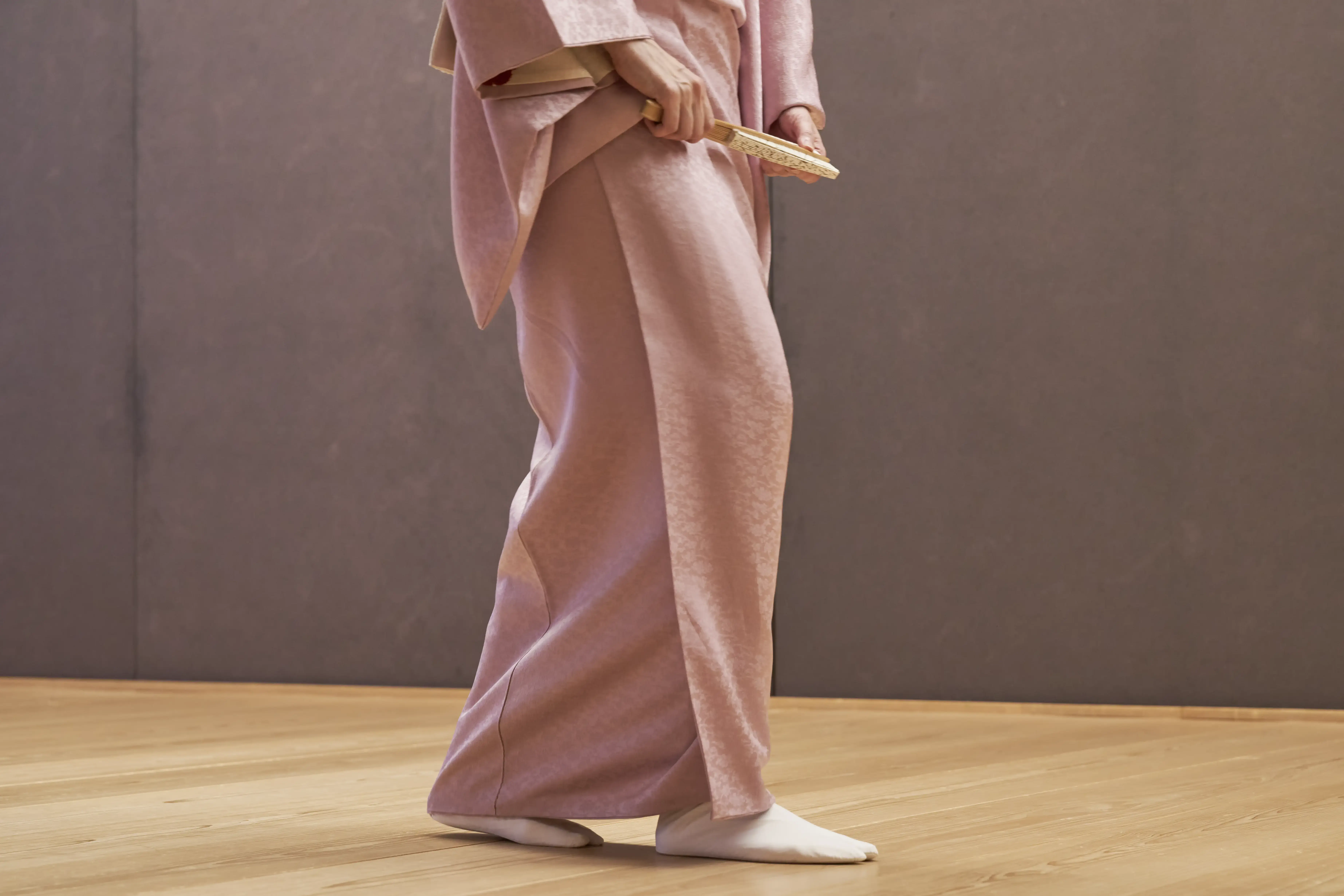
Yukari: First, you put on tabi — split-toe Japanese socks — and hold a fan. Since we bow both before and after practice, we begin with the bow. Then you'll experience movements characteristic of Nihon Buyō: opening and closing the fan, standing and sitting, suri-ashi, and ashibyōshi — rhythmic stamping of the feet.
Movement that looks simple at first glance turns out, the moment you try it, to be anything but.
Toguri: Where are first-timers most often surprised?
Yukari: The feel of tabi is very different from socks, and many people find it strange in a good way — the sensation of tabi alone is already a new experience. You kneel, bow, and then, "now stand" — and you can't stand. You try to open the fan, and it won't open. Many people are thrown right from that very first step. Nihon Buyō is often thought of as quiet movement, but people are surprised by how much muscle it actually uses. Some end up with sore muscles; some discover their ankles are far stiffer, or far softer, than they expected — they come to know their own bodies.
Toguri: I understand some people feel anxious about what they can't do.
Yukari: Talking with people who keep coming back to practice, I find they all feel quite anxious about the things they can't do. They assume that if they try hard, they'll manage it right away. But opening a fan, standing and sitting, suri-ashi — all of it is completely new to them. It isn't something you master and take home in a single day. I don't expect anyone to manage it in a day either — there's no shortcut. Day by day, at some point the fan suddenly opens, the muscles build, and you find you can stand. When everything is new and unfamiliar all at once, concentration runs out quickly too. It isn't simply a matter of practicing longer — I adjust the pace to how each person is doing. I think that anxiety comes precisely because people feel Nihon Buyō carries such a high threshold, so I hope, first of all, that they can simply enjoy it. Watching someone else being taught beside you, rather than only moving yourself, can also bring a moment of "ah, so that's what it means" — that too is part of the experience.
Having known that difficulty in her own body, one looks again at the teacher's dance. And the way it looks changes.
Toguri: What do you want people to feel when they watch you dance?
Yukari: Expressing something through a fan is, in truth, an extremely difficult thing. Through repeated practice, there's a sense in which hand and fan gradually become one. I'd be glad if people paid attention to that. There is a great deal of choreography that expresses the heart of Japan, the landscape of Japan. It's become harder to feel the four seasons today, but I hope people can feel the seasons, and the emotional sensibility of people in the past, through the dance. I think that connects, too, to knowing Japan.
Toguri: What kind of people do you want to come?
Yukari: Anyone, really. Even people who know nothing, who are encountering Nihon Buyō for the first time. Because it has a movement vocabulary quite unlike Western forms, I think people who play sports, or practice other kinds of dance, will find new discoveries here too. I hope people can feel the interest of one dancer playing out so many different roles alone. Every country has its own dance. I hope people can feel the happiness of people from different backgrounds sharing what is common, what connects, through a single art form.
The experience is not a place to measure how well you're doing. Bewildered by the feel of tabi, laughing as the fan refuses to open, understanding something by watching the person beside you — each of these becomes a small encounter exchanged with the teacher.
Closing
For Yukari, dance is a prayer that connects gods, nature, and people. She stood on stage at three, inherited the dance, and deepened that prayer as she saw off her grandmother, and then her mother. Just as she is connected to a grandfather she never met by a single character in her name, the single opening of a fan, a single step of suri-ashi, quietly binds a distant span of time to this present moment. To be connected to something while you are alive is, she says, happiness in itself. The time spent together in the keiko-ba, too, must be one small part of that connection.
What words can trace ends here. In the instant a fan opens, in the sound that fills the keiko-ba, in the expression on her face as she stands before that photograph — something lives in the gesture and the atmosphere itself that words alone cannot hold. If this has made you want to feel, just a little more, the movement of her hands, the air of this place, there is a film that continues where this leaves off.